At North Canton Public Library, customer service is rooted in intentional communication, before a patron ever approaches a desk. This session explores how NCPL has strengthened access and inclusion by making services clearer, more visible, and more responsive to diverse needs. Attendees will learn how sensory-inclusive practices, accessible design choices, assistive tools, and thoughtfully designed services help reduce barriers and create a sense of belonging for patrons with sensory, mobility, hearing, vision, and cognitive needs. Through practical examples and lessons learned, this presentation offers scalable strategies libraries can use to make access a visible, integrated part of everyday customer service.
Learning Objectives:
Learn sensory-inclusive practices
How thoughtful design helps to weaken barriers
Learn about assistive tools and more
Presenter: Andrea Legg is the Director of the North Canton Public Library, where she has led with a focus on access, inclusion, and community-centered service since 2020 (yes, she started right at the beginning of the pandemic and lived to tell the tale). She has worked in public libraries since 2008 and currently serves on the Tuscarawas County Board of Developmental Disabilities and the Akron Children's Hospital NICU Parent Mentor Program. Andrea is very serious about libraries, not serious about herself, and lives under the benevolent but firm rule of two corgis who supervise all of her leadership and life decisions. more info...
Today’s workplaces bring together multiple generations, each shaped by different experiences, communication preferences, and expectations. These differences can strengthen teams, but they can also lead to misunderstandings, frustration, and missed opportunities for connection. This interactive session takes a deeper dive into generational communication, exploring how and why communication styles vary, what influences those preferences, and how to adapt in ways that build understanding and trust.
Learning Objectives:
Understand key generational differences in communication styles and expectations.
Recognize how generational differences can impact workplace interactions and perceptions.
Develop strategies for adapting communication to connect more effectively across generations.
Presenter:
Ragan Snead, Executive Director, Northeast Ohio Regional Library System, has over 15 years of experience in public and academic libraries. She has a passion for staff development and helping library staff reach their full potential. In addition to her work in various areas of librarianship, Ragan has experience in management, community outreach, and strategic planning. She received her MLIS from Kent State University and her MBA from Lake Erie College. more info...
Join your peers to exchange ideas, celebrate successes, and discover new solutions to common challenges.
This meeting will be held through Zoom which is user friendly to all devices. You will receive a link in your confirmation email a reminder 2 hours before the meeting. We hope you will join us. Please send Carrie Kibby any items you would like to discuss.
Adapted from the latest work by Dr. David Yeager (10 to 25: The Science of Motivating Young People), this training equips public-facing library staff with practical tools and strategies to cultivate an environment of respect that improves communication and strengthens relationships with teens. Participants will learn strategies rooted in current psychology and neuroscience to create a more positive, engaging environment for teens that extends to all patrons.
Learning Objectives:
Attendees will understand how teen brain development affects teens' perception of the world around them and how they interact with it.
Attendees will understand how to set and enforce boundaries appropriately with teens to elicit desired behaviors and avoid undesirable ones.
Attendees will learn to employ respect, transparency, and appropriate expectations to foster positive interactions and relationships with teens in the library.
Presenters: Carolyn Bagley is the intermediate/teen librarian at Firestone Park Library, part of the Akron–Summit County Public Library system. Drawing on 15 years of experience as an educator, she is a vocal advocate for middle and high school students, dedicated to helping adults shift their mindset about teenagers toward seeing them as capable, thoughtful, and worthy of trust. Carolyn is excited to support fellow public service workers with practical professional development rooted in teen-centered practice.
Kelly Chaplin has been working with youth for a decade and is currently the Assistant Youth Services Coordinator at Akron-Summit County Public Library. Kelly helps connect youth librarians with community representatives. She has experience with organizing large-scale programs such as the Library's mini-comicon Geekfest and system-wide services like the free book box subscription Lit Loot. Collaboration is key in all these efforts, and she deeply values what the Library staff can create when working together. She enjoys it when teens teach her new things and encourages youth to participate at their library and in the community.
Abigail Krukemeyer is an Intermediate and Teen Librarian with Akron-Summit County Public Library. She is passionate about adolescent development and is dedicated to providing services and opportunities that equip young people to succeed in today's multimodal world.
Emily Smith has worked for Akron Summit County Public Library for 8 years, currently serving as one of their Collection Development Librarians, and previously worked as an Intermediate/Teen Librarian. Emily holds a BA in Sociology from the University of Mount Union and an MLIS from Kent State University. Her educational and career background has afforded her the opportunity to work alongside youth and learn and understand their behavior, particularly inside a public library setting. more info...
Join your peers to exchange ideas, celebrate successes, and discover new solutions to common challenges.
This meeting will be held through Zoom which is user friendly to all devices. You will receive a link in your confirmation email a reminder 2 hours before the meeting. We hope you will join us. Please send agenda items/questions to Hillary Brown.
This webinar will discuss safety and security issues that we are currently dealing with in today's libraries, whether it's unruly patrons, teenagers, threats that we are facing in our communities or mental health. The session will cover what resources we have available and how to make connections with our community partners who can assist us with some of our issues.
Presenter:
Bossie Loggins III is the Security Coordinator for the Cuyahoga County Public Library system and have been with the system for the past 14 years. Before taking that position, he was the Security Supervisor for the Cleveland Heights-University Heights Library system. In his 24 years of work in public libraries, he has been involved in almost any security and/or safety situation you can imagine. He has presented security topics for NEO-RLS, OLC conferences and several library systems throughout the state of Ohio on security issues, teen behavior and staying safe in libraries. more info...
Join your peers to exchange ideas, celebrate successes, and discover new solutions to common challenges.
This meeting will be held through Zoom which is user friendly to all devices. You will receive a link in your confirmation email a reminder 2 hours before the meeting. We hope you will join us. Please send agenda items/questions to Ragan Snead.
The Science of Reading requirement for schools in Ohio is leading to an increase in questions from caregivers about how to help their children work on reading skills that align with what they’re learning in school. In this session, there will be an overview of what The Science of Reading is, with helpful terminology to assist with answering questions. There will be information about phonics and decodable books and additional resources to refer to families.
Learning Objectives:
Understand the basics of the Science of Reading.
Learn about phonics and decodable materials in terms of reader’s advisory and what to look for in your collection to answer questions.
Discover other resources that might be helpful to relay to caregivers and educators.
Presenter:
Sam Schneider is the Children’s Manager at the Warren-Trumbull County Public Library. She has spent 19 years working in various positions within public and academic libraries, but primarily within Youth Services. Currently, she serves as an Ohio Ready to Read Trainer and Task Force member. With a passion for promoting literacy and library services, she finds working with families to be one of the most fulfilling endeavors of her career. She received her MLIS from Kent State University and also has degrees in Early Childhood Education and English.
Join your peers to exchange ideas, celebrate successes, and discover new solutions to common challenges.
This meeting will be held through Zoom which is user friendly to all devices. You will receive a link in your confirmation email a reminder 2 hours before the meeting. We hope you will join us. Please send agenda items/questions to Hillary Brown.
Join your peers to exchange ideas, celebrate successes, and discover new solutions to common challenges.
This meeting will be held through Zoom which is user friendly to all devices. You will receive a link in your confirmation email a reminder 2 hours before the meeting. We hope you will join us. Please send agenda items/questions to Yvette Wasko.
During this webinar we will review terminology relevant to the lesbian, gay, bisexual, transgender, queer and intersex community, discuss how to create a welcoming environment at work and describe ten specific steps to becoming an ally at work, at home and in the community. Lastly, we will introduce PFLAG as a community resource and review materials available to support, educate and advocate.
Learning Objectives:
Review LGBTQI+ terms
Discuss how to create a welcoming environment
Describe strategies to become an ally
Introduce PFLAG as a community resource
Presenter:
Sharon Groh-Wargo has been involved with PFLAG Cleveland for over 20 years, serving as President from 2005-2020. She is currently Vice-President. Founded in 1973, PFLAG is the first and largest organization dedicated to supporting, educating, and advocating for LGBTQ+ people and their families. It is dedicated to creating a caring, just, and affirming world for LGBTQ+ people and those who love them. PFLAG Cleveland has been active in this effort for the Greater Cleveland area since 1985.
Sharon is a registered dietitian nutritionist (RDN) and holds a PhD in nutrition. Her long experience in the neonatal intensive care unit (NICU) informs her understanding of sexual orientation, gender identity, intersex, and the challenge of interacting with the health care system. While in clinical practice she was instrumental in forming the MetroHealth Pride Alliance. Sharon also instituted collaborations with all three major hospital systems in Cleveland for training physicians to observe a PFLAG Cleveland monthly support group meeting. They are able to hear first-hand the impact “coming out” has on families. Sharon is currently Professor Emeritus at Case Western Reserve University School of Medicine.
Sharon has been married to her husband, Frank for 51 years. They have two children. Her oldest came out as a lesbian at the end of their freshman year in college. That is the event that precipitated her involvement as a volunteer with PFLAG. She exemplifies what people involved with PFLAG often say: “When you no longer need PFLAG (for support), PFLAG needs you (for education and advocacy)”
Hannah Van Sile is a Teen Librarian living and working in Canton, Ohio. She serves on PFLAG Cleveland’s Board as a student intern and works with the American Library Association’s Rainbow Round Table reading and reviewing LGBTQIA+ publications for ALA’s Over the Rainbow Book List, where she serves as an administrator. Hannah holds a Bachelor of Arts in English and Master in Library Science from Kent State University and was honored to be selected as a 2024 ALA Emerging Leader. She is passionate about protecting public libraries as access points for resources, personal growth, and community connection, particularly for those of marginalized identities.
Join your peers to exchange ideas, celebrate successes, and discover new solutions to common challenges.
This meeting will be held through Zoom which is user friendly to all devices. You will receive a link in your confirmation email a reminder 2 hours before the meeting. We hope you will join us. Please send agenda items/questions to Melissa Lattanzi.
An increasing number of Ohio libraries are offering Notary Public services to their patrons as a community service. As such, libraries (and their individual notaries) can be potentially liable for these all-too-often under-trained staff notaries, when they are dealing with many and varied signing requests from your patrons.
We are again presenting our popular advanced Ohio notary class "Beyond the Stamp - Your Role, Responsibilities, and Risks as an Ohio Notary Public" , updated with Ohio's new notary laws that were effective April 4, 2025.
Proper training is essential for your staff notaries! We have trained hundreds of Ohio librarians statewide, and you'll be surprised at how much you don't know, about what you don't know! As mentioned, lack of notary knowledge could lead to errors, and potential exposure for both you and your library! We particularly stress documents librarians should NOT handle!
This is THE best, longest-running, and most comprehensive Ohio notary training available, and is particularly valuable for LIBRARIANS providing notary services to their patrons. It's the opportunity to receive the full Ohio training you never had. Importantly, the class is IN-PERSON, so all questions are welcomed, and you can learn from the experiences of the other notaries attending.
*Check-in begins 30 minutes before class. Exams for NEW applicants will be given immediately following class.
The Ohio Society of Notaries is the professional association for Ohio notaries, dedicated to awareness, education, and advocacy for Ohio's 220,000 notaries, and the important role they play in protecting our citizens. We have been THE primary resource for Ohio notary informationsince 2009. Visit us at www.ohionotaries.org
Unlike other notary classes around the state, this is not just a boring regurgitation of Ohio statutes and legalese, by those who have never been in the REAL Ohio notary world, or the online versions where you can't even ask questions.
It's taught by Roger Rill, President of the Ohio Society of Notaries, with over 48 years of Ohio notary experience. Roger was the co-author and driving force behind passage of the Ohio Notary PublicModernization Act that became effective law in September 2019, and which completely revamped and improved Ohio's notary system. Roger was honored by NNA as a 2019 National Notary Of The Year Special Honoree, and holds Master Notary Public accreditation. Learn from the best!
*NOTE: We are also an Authorized Provider of Ohio Notary Training/Testing for the Secretary of State.
If your current commission expires within ONE YEAR of the classdate, this class fulfills the Training Requirement foryour renewal.As mentioned, the Ohio exam will also be given for NEW notary applicants - details below.
Class may run a little longer with questions. Feel free to bring a lunch.
âA class description, along with some additional Ohio information you'll find helpful are here in theDOCUMENTS. If you don't know the FAQ answers, you are risking your commission, and potential liability, and you REALLY need to join us for this seminar!
*IMPORTANT - BRING THE DOCUMENTS TO CLASS; you can also use them for the exam!
Registration fee is $75, or $130 if a NEW applicant also taking the exam.
**PLEASE INDICATE WHICH CLASS LOCATION YOU'LL BE ATTENDING**!
*Checks/money orders are payable to Ohio Society of Notaries, and mailed to: OSN, 5669 Slater Ridge, Hilliard, OH 43026. Registration deadline is 24 hours prior to each class date.
We much prefer pre-payment to minimize no-shows, and not have a long line at check-in. Payments of cash, check, or money order will beaccepted at the door, but you MUST pre-register!! Receipts provided upon request.NO CREDIT CARDS.
You'll receive a detailed email confirmation of your registration a few days prior to class.
*Please do NOT register with NEO-RLS!*
**ADVANCE REGISTRATION IS REQUIRED!! Please registerASAPas seats may be limited.Reply to roger@ohionotaries.org or notary13@hotmail.com with name, years as notary (or new), and any particular issues you'd like discussed.
If a current notary, please include your commission expiration date.
Importantly, include if you are a NEW notary applicant, OR if your current commission expires before September 24 2027!
You'll be provided a class completion and/or exam certificate to submit to the Secretary of State to complete your new or renewal training requirement.
It's a fun class, with lots of interaction and experiences from your classmates, which will include local mobile notaries. Swap business cards with other attendees and create your own notary network!
â**Feel free to also join our Ohio Notary Network forum Facebook Group, and hang out/chat with over 4000 other Buckeye notaries!**
Call 614-336-7878 or email info@ohionotaries.org for any Ohio notary questions, anytime. We answer the phone and emails day or evening, 7 days a week, and the service is FREE! We're here for YOU - this is the ONLY such resource in the state!
Hope to see you! Other upcoming classes around the state will always appear on the Training Page of our website.
Roger Rill, President Ohio Society of Notaries 614 336 7878 www.ohionotaries.org
This webinar focuses on the foundations of effective meetings: why we meet, when we should not meet, and how to create clarity before anyone enters the room.
Participants will explore three key questions to ask before every meeting and consider how meeting purpose, agenda design and participation choices can reduce fatigue and improve outcomes.
We will also look at meeting culture — including why people attend meetings they do not need to be in, why unclear meetings create stress, and how kinder, clearer structures can support better work.
Learning Objectives:
Identify when a meeting is needed and when another form of communication would be better.
Use three key planning questions to clarify the purpose and value of a meeting.
Design clearer agendas that support focus, preparation and decision-making.
Recognize common causes of meeting fatigue and meeting overload.
Apply simple strategies to make meetings more purposeful, efficient and respectful of people’s time.
Reflect on their own meeting culture and identify one practical change they can make immediately.
Presenter:
Helen Rimmer is the founder of The Kind Brave Leader and Empower: The Library Skills Collective. She is a kindness and wellbeing coach, facilitator, Strengthscope Master, certified systemic team coach, and holds a PGCert in the Psychology of Kindness and Wellbeing at Work. Helen brings over 20 years’ experience in library and higher education leadership, alongside her work supporting individuals, teams and organizations to build kinder, braver and more sustainable workplaces. Her work focuses on kindness-led leadership, burnout prevention, boundaries, wellbeing, inclusion and creating humane cultures of work.
An increasing number of Ohio libraries are offering Notary Public services to their patrons as a community service. As such, libraries (and their individual notaries) can be potentially liable for these all-too-often under-trained staff notaries, when they are dealing with many and varied signing requests from your patrons.
We are again presenting our popular advanced Ohio notary class "Beyond the Stamp - Your Role, Responsibilities, and Risks as an Ohio Notary Public" , updated with Ohio's new notary laws that were effective April 4, 2025.
Proper training is essential for your staff notaries! We have trained hundreds of Ohio librarians statewide, and you'll be surprised at how much you don't know, about what you don't know! As mentioned, lack of notary knowledge could lead to errors, and potential exposure for both you and your library! We particularly stress documents librarians should NOT handle!
This is THE best, longest-running, and most comprehensive Ohio notary training available, and is particularly valuable for LIBRARIANS providing notary services to their patrons. It's the opportunity to receive the full Ohio training you never had. Importantly, the class is IN-PERSON, so all questions are welcomed, and you can learn from the experiences of the other notaries attending.
*Check-in begins 30 minutes before class. Exams for NEW applicants will be given immediately following class.
The Ohio Society of Notaries is the professional association for Ohio notaries, dedicated to awareness, education, and advocacy for Ohio's 220,000 notaries, and the important role they play in protecting our citizens. We have been THE primary resource for Ohio notary informationsince 2009. Visit us at www.ohionotaries.org
Unlike other notary classes around the state, this is not just a boring regurgitation of Ohio statutes and legalese, by those who have never been in the REAL Ohio notary world, or the online versions where you can't even ask questions.
It's taught by Roger Rill, President of the Ohio Society of Notaries, with over 48 years of Ohio notary experience. Roger was the co-author and driving force behind passage of the Ohio Notary PublicModernization Act that became effective law in September 2019, and which completely revamped and improved Ohio's notary system. Roger was honored by NNA as a 2019 National Notary Of The Year Special Honoree, and holds Master Notary Public accreditation. Learn from the best!
*NOTE: We are also an Authorized Provider of Ohio Notary Training/Testing for the Secretary of State.
If your current commission expires within ONE YEAR of the classdate, this class fulfills the Training Requirement foryour renewal.As mentioned, the Ohio exam will also be given for NEW notary applicants - details below.
Class may run a little longer with questions. Feel free to bring a lunch.
âA class description, along with some additional Ohio information you'll find helpful are here in theDOCUMENTS. If you don't know the FAQ answers, you are risking your commission, and potential liability, and you REALLY need to join us for this seminar!
*IMPORTANT - BRING THE DOCUMENTS TO CLASS; you can also use them for the exam!
Registration fee is $75, or $130 if a NEW applicant also taking the exam.
**PLEASE INDICATE WHICH CLASS LOCATION YOU'LL BE ATTENDING**!
*Checks/money orders are payable to Ohio Society of Notaries, and mailed to: OSN, 5669 Slater Ridge, Hilliard, OH 43026. Registration deadline is 24 hours prior to each class date.
We much prefer pre-payment to minimize no-shows, and not have a long line at check-in. Payments of cash, check, or money order will beaccepted at the door, but you MUST pre-register!! Receipts provided upon request.NO CREDIT CARDS.
You'll receive a detailed email confirmation of your registration a few days prior to class.
*Please do NOT register with NEO-RLS!*
**ADVANCE REGISTRATION IS REQUIRED!! Please registerASAPas seats may be limited.Reply to roger@ohionotaries.org or notary13@hotmail.com with name, years as notary (or new), and any particular issues you'd like discussed.
If a current notary, please include your commission expiration date.
Importantly, include if you are a NEW notary applicant, OR if your current commission expires before September 24 2027!
You'll be provided a class completion and/or exam certificate to submit to the Secretary of State to complete your new or renewal training requirement.
It's a fun class, with lots of interaction and experiences from your classmates, which will include local mobile notaries. Swap business cards with other attendees and create your own notary network!
â**Feel free to also join our Ohio Notary Network forum Facebook Group, and hang out/chat with over 4000 other Buckeye notaries!**
Call 614-336-7878 or email info@ohionotaries.org for any Ohio notary questions, anytime. We answer the phone and emails day or evening, 7 days a week, and the service is FREE! We're here for YOU - this is the ONLY such resource in the state!
Hope to see you! Other upcoming classes around the state will always appear on the Training Page of our website.
Roger Rill, President Ohio Society of Notaries 614 336 7878 www.ohionotaries.org
An increasing number of Ohio libraries are offering Notary Public services to their patrons as a community service. As such, libraries (and their individual notaries) can be potentially liable for these all-too-often under-trained staff notaries, when they are dealing with many and varied signing requests from your patrons.
We are again presenting our popular advanced Ohio notary class "Beyond the Stamp - Your Role, Responsibilities, and Risks as an Ohio Notary Public" , updated with Ohio's new notary laws that were effective April 4, 2025.
Proper training is essential for your staff notaries! We have trained hundreds of Ohio librarians statewide, and you'll be surprised at how much you don't know, about what you don't know! As mentioned, lack of notary knowledge could lead to errors, and potential exposure for both you and your library! We particularly stress documents librarians should NOT handle!
This is THE best, longest-running, and most comprehensive Ohio notary training available, and is particularly valuable for LIBRARIANS providing notary services to their patrons. It's the opportunity to receive the full Ohio training you never had. Importantly, the class is IN-PERSON, so all questions are welcomed, and you can learn from the experiences of the other notaries attending.
*Check-in begins 30 minutes before class. Exams for NEW applicants will be given immediately following class.
The Ohio Society of Notaries is the professional association for Ohio notaries, dedicated to awareness, education, and advocacy for Ohio's 220,000 notaries, and the important role they play in protecting our citizens. We have been THE primary resource for Ohio notary informationsince 2009. Visit us at www.ohionotaries.org
Unlike other notary classes around the state, this is not just a boring regurgitation of Ohio statutes and legalese, by those who have never been in the REAL Ohio notary world, or the online versions where you can't even ask questions.
It's taught by Roger Rill, President of the Ohio Society of Notaries, with over 48 years of Ohio notary experience. Roger was the co-author and driving force behind passage of the Ohio Notary PublicModernization Act that became effective law in September 2019, and which completely revamped and improved Ohio's notary system. Roger was honored by NNA as a 2019 National Notary Of The Year Special Honoree, and holds Master Notary Public accreditation. Learn from the best!
*NOTE: We are also an Authorized Provider of Ohio Notary Training/Testing for the Secretary of State.
If your current commission expires within ONE YEAR of the classdate, this class fulfills the Training Requirement foryour renewal.As mentioned, the Ohio exam will also be given for NEW notary applicants - details below.
Class may run a little longer with questions. Feel free to bring a lunch.
âA class description, along with some additional Ohio information you'll find helpful are here in theDOCUMENTS. If you don't know the FAQ answers, you are risking your commission, and potential liability, and you REALLY need to join us for this seminar!
*IMPORTANT - BRING THE DOCUMENTS TO CLASS; you can also use them for the exam!
Registration fee is $75, or $130 if a NEW applicant also taking the exam.
**PLEASE INDICATE WHICH CLASS LOCATION YOU'LL BE ATTENDING**!
*Checks/money orders are payable to Ohio Society of Notaries, and mailed to: OSN, 5669 Slater Ridge, Hilliard, OH 43026. Registration deadline is 24 hours prior to each class date.
We much prefer pre-payment to minimize no-shows, and not have a long line at check-in. Payments of cash, check, or money order will beaccepted at the door, but you MUST pre-register!! Receipts provided upon request.NO CREDIT CARDS.
You'll receive a detailed email confirmation of your registration a few days prior to class.
*Please do NOT register with NEO-RLS!*
**ADVANCE REGISTRATION IS REQUIRED!! Please registerASAPas seats may be limited.Reply to roger@ohionotaries.org or notary13@hotmail.com with name, years as notary (or new), and any particular issues you'd like discussed.
If a current notary, please include your commission expiration date.
Importantly, include if you are a NEW notary applicant, OR if your current commission expires before September 24 2027!
You'll be provided a class completion and/or exam certificate to submit to the Secretary of State to complete your new or renewal training requirement.
It's a fun class, with lots of interaction and experiences from your classmates, which will include local mobile notaries. Swap business cards with other attendees and create your own notary network!
â**Feel free to also join our Ohio Notary Network forum Facebook Group, and hang out/chat with over 4000 other Buckeye notaries!**
Call 614-336-7878 or email info@ohionotaries.org for any Ohio notary questions, anytime. We answer the phone and emails day or evening, 7 days a week, and the service is FREE! We're here for YOU - this is the ONLY such resource in the state!
Hope to see you! Other upcoming classes around the state will always appear on the Training Page of our website.
Roger Rill, President Ohio Society of Notaries 614 336 7878 www.ohionotaries.org
Join your peers to exchange ideas, celebrate successes, and discover new solutions to common challenges.
This meeting will be held through Zoom which is user friendly to all devices. You will receive a link in your confirmation email a reminder 2 hours before the meeting. We hope you will join us. Please send agenda items/questions to Hillary Brown.
This is our 25th year for Back to the Book. We are excited to continue our tradition for diving deep into everything we love about reading. We’re kicking off the morning with mastering the art of the book discussion. You’ll gain practical insights on evaluating your current groups, followed by a fast-paced "lightning round" showcasing unique, adaptable book club models. After lunch you will be treated to an engaging session on Inclusive Romance with Jessica Pryde, author of Black Love Matters. We will end the day with local author and librarian, Cari Dubiel as she shares her Librarians Guide to Authors. Don’t miss this milestone event packed with fresh ideas, professional inspiration, and great conversation!
The Next Chapter: Giving Your Book Discussion New Life
Is your book discussion group thriving, or just going through the motions? This interactive presentation will help book discussion leaders evaluate what's working, identify what's no longer engaging members, and discover practical ways to refresh and strengthen their existing groups. We'll explore how to assess group dynamics, meeting formats, book selection, participation, and member satisfaction, while sharing strategies for fostering meaningful conversations, welcoming new ideas, and keeping your book discussion vibrant and relevant. Whether your group has been meeting for years or is simply ready for a reset, you'll leave with actionable tools and fresh inspiration to help your book discussion flourish.
Presenter:
Noelle Tagliarini has been working for Cuyahoga County Public Library for the last 11 years where she started working in circulation and then quickly promoted into reference. Prior to working in the library, she worked in Television, Sports Marketing, Advertising, Public Relations and Restaurant Management. She finally figured out in her forties what she wanted to be when she grew up after she started working at the library. Getting a master’s degree of any sort was never on her radar until she fell in love with her job, so she decided to get her MLIS from Valdosta State University at the same time her daughters were in college. 2026 has proven to be a great year so far as she was just recently promoted to the Head of Adult at the Brecksville Branch as well as Grandma to her first grandchild.
Love For All, By All: Changing Lives One Inclusive Romance Novel at a Time
While romance has always been a popular genre, the increase in both interest and exposure since the 2020 COVID-19 shutdown has made it more popular than ever. Not only are more people reading romance books, but a record number of people writing them as well. This explosion in the genre means we’re seeing books from more points of view, more stories by and about people from historically and systemically excluded and marginalized groups, and more expanded concepts of what a happily ever after (HEA) looks like.
Learning Objectives:
Attendees will be able to clearly define the genre requirements of a romance novel and the common tropes, subgenres, and genre expectations of the modern reader.
Attendees will have the tools to help maintain a practice of considering representative experiences when sharing one or multiple romances with peers or patrons.
Attendees will be capable of using library and external resources to discover romances by authors who share the representative lived experience of their characters, and clearly understand why those should be presented before or alongside romances written by authors who do not.
Attendees will receive a starter list of romance authors, publishers, and titles to explore and share, as well as resources to discover new ones as they emerge.
â
Presenter: âJessica P. Pryde is a reader, writer, editor, and curator currently living in Tucson, Arizona. After over a decade as a support services librarian for Pima County Public Library, she left to pursue life away from the Big Light and now works independently from a low-lit cave home office. As a Professional Book Person, she utilizes the tools born from a hard-won Humanities degree and a handy MLIS to revolutionize her little part of the world one inclusive romance novel at a time. She is the editor of the essay anthology Black Love Matters: Real Talk on Romance, Being Seen, and Happily Ever Afters and is a Contributing Editor for Book Riot, where she formerly co-hosted the When In Romance podcast and continues to write about romance, libraries, and occasionally some other bookish things. In 2025 she actualized a decade-long dream and founded Why Choose: A Romance Bookstore, which centers and celebrates romance written by historically and systemically excluded and marginalized groups. Somewhere in the midst of that, she also co-founded Pink Plaid Literary, an editorial company focused on Cultural Accuracy and Sensitivity Editing (CASE). During the rare moments in which she is not actively pursuing books and romance as a special interest, you can find her exploring the various tea shops in Southern Arizona and following her favorite performers around the Desert Southwest. Read more about her at www.jessicapryde.com.
The Librarian's Guide to Authors
Every community is home to authors. Whether independently or traditionally published, authors are out there wanting to connect with you. We’ll explore the relationship between authors and librarians, including the unique ways each group is attracted to books and how to use those attractions to work together.
Participants will also receive a free copy of Cari’s short ebook, THE LIBRARIAN’S GUIDE TO AUTHORS.
Presenter: Cari Dubiel is the Assistant Director at Twinsburg Public Library. She brings many years of experience to both her author and library careers. Leveraging her unique perspective, Cari speaks to both authors and librarians about the ways they can partner with each other. She has written both THE LIBRARIAN’S GUIDE TO AUTHORS and THE AUTHOR’S GUIDE TO LIBRARIES.
While artificial intelligence is not new technology, the ways it can interact with people and information has changed rapidly in the past 5 years. AI chat systems are everywhere - AI in phones, on social media, and as independent services. But what about information professionals and libraries? How does AI affect librarianship and how can we respond? Librarians don’t need to embrace AI or become experts, but growing their own understanding is a key part of coexisting with AI and serving their users.
Learning Objectives:
Learn how AI and libraries can coexist through awareness,
Learn how AI and libraries can coexist through education
Learn how AI and libraries can coexist through thoughtful engagement
Presenters:
Lynn Warner is a Research and Health Sciences Librarian at the University of Cincinnati. Lynn supports students and faculty in the College of Nursing and College of Allied Health Sciences. She has a passion for information literacy instruction and enjoys teaching people how to find and evaluate the information they are seeking. Lynn has taken an interest in learning about AI tools and how they can (and can’t) be utilized in the research process, and has been involved in AI Literacy initiatives at UC.
Madeleine Gaiser is an Online Learning and Instruction Librarian at University of Cincinnati’s College of Education, Criminal Justice and Human Services (CECH) Library. Joining UC Libraries in 2020, Madeleine supports academic research, maintains and creates online resources, and purchases library materials. Madeleine has participated in multiple AI initiatives at UC and regularly seeks professional development opportunities on the subject. In her free time, Madeleine collects cookbooks and enjoys longs walks through the Aldi Finds aisle. more info...
The Workplace Wellbeing Active Learning Community is open to anyone open to any staff interested in workplace wellbeing, wellness, and related topics. Join your peers to exchange ideas, celebrate successes, and discover new solutions to common challenges.
This meeting will be held through Zoom which is user friendly to all devices. You will receive a link in your confirmation email a reminder 2 hours before the meeting. We hope you will join us. Please send agenda items/questions to Hillary Brown.
What artificial intelligence (AI) can your patrons use safely? You can say nothing, but you'd be wrong. We teach patrons how to use text-to-speech or other accessibility features that are, in fact, AI. Rather than start with the negative, let's tell patrons what they can use and work towards the list that is not safe.
Learning Objectives:
An understanding of AI and privacy policies.
An understanding of ALA's working papers on guidance for libraries on AI
An editable chart of an AI Policy for your organization to create
Presenter:
Dr. Robbie Barber is an electrical engineer from Georgia Tech who wandered into a school library. As a teacher-librarian, she works with high school students and teachers to find the best resources, use technology, and locate the perfect book. Dr. Barber teaches classes on using research databases and how to better search the internet. She researches the latest technology, plays with AI, and creates professional presentations on recognizing fake news and other tech-infused ideas in the classroom and the library. more info...
Modeled off the Chicago-area Adult Reading Round Table, the Guided Reading Round Table (GRRT) will lead library staff through an in-depth genre study. Over the course of a year, we will explore cozy fiction, with a specific focus on the science fiction, fantasy, mystery, horror, healing, and romance subgenres. This penultimate session will explore and compare cozy mystery and cozy horror through guided discussions to identify popular authors, titles, tropes, & trends. A reading list & questions will be supplied; while it is not required, it is recommended to read through some of the titles and questions. The GRRT is dedicated to the development of readers’ advisory skills and the promotion of reading for pleasure.
Join Jordan Ostrum, LGBTQIA+ Services Specialist at Dayton Metro Libraries, for a discussion on the importance of LGBTQIA+ services in public libraries. He will explore the creation of the LGBTQIA+ Services Specialist role and share programming ideas for library workers nationwide. This session will be information-driven and include time for questions and discussion, making it a valuable opportunity for library professionals interested in enhancing their services.
Learning Objectives:
Recognize the various intersections of LGBTQIA+ patrons' identities and needs.
Begin to evaluate your library's strengths in and capacity for connecting your LGBTQIA+ patrons to resources.
Reflect on how to adapt the specific approaches to providing LGBTQIA+ programming to your own library.
Presenter:
Jordan Ostrum (he/him/his), proudly serves as the LGBTQIA+ Services Specialist for Dayton Metro Library. He holds a B.A. in Gender & Sexuality Studies from Ursinus College and a Master of Library and Information Studies from the University of Alabama. The Advocate, the nation's largest and oldest LGBTQ magazine, honored Jordan as Wyoming Champion of Pride in 2018 for his work empowering LGBTQ youth in the nation's reddest and most rural state. Internationally, Jordan's scholarship on Greek -letter organizations has been cited by Canadian researchers and he recently presented at the The Trans* Research Association of Ireland’s First Annual Symposium. He is currently working on a chapter for the upcoming LItwin Press edited anthology, Potions, Powers, and Prejudice: Reassessing Harry Potter. For fun, Jordan enjoys chewing the scenery in community theatre productions and befriending basset hounds.
The State Library of Ohio will host the ODNFest: Authenticity in the Digital Age on October 8, 2026 at the Columbus Metropolitan Library: Dublin Branch in Dublin, Ohio. ODNFest is an opportunity for library and museum digitization professionals to gather and explore current and relevant digitization topics. This year, the event will focus on authenticity in the rapidly changing digital landscape as library professionals navigate AI, authenticity in digital collections, and so much more.
Registration includes morning coffee and pastries and a boxed lunch.
Featured Sessions
Title: Authenticity in Heritage Digitization
Presenter: Doug Peterson, Digital Object Authenticity Working Group
Session Description: The Digital Object Authenticity Working Group (DOAWG) focuses on a specific subset of those efforts: creating the tools, workflows, and best practices that lead to a world where heritage digitization consumers are informed as to how much and in what ways digital objects can be trusted as a faithful and authentic representation of the physical object it represents. This presentation will cover the three pillars of authenticity as DOAWG has defined them: Provenance, Visual Accuracy, and Context.
Title: Practical Workflows for Large Born-Digital Collections
Presenters: Lara Friedman-Shedlov, Digital Records Archivist, University of Minnesota
Andrew McDonnell, Digital Archivist, University of Kentucky
Session Description: This session will present practical workflows for processing and preserving born-digital collections of challenging proportions from ever-evolving sources to make them meaningfully accessible.
The University of Minnesota Libraries Archives and Special Collections and the University of Kentucky Libraries Special Collections Research Center have both confronted the challenge of migrating and preserving collections containing over a thousand CDs and DVDs. While optical media offers a familiar format, the scale of that work required a renewed workflow and different tools. Simultaneously, they face the burgeoning challenge of new accessions arriving as files created and stored in Google Drive, OneDrive, YouTube channels, and other cloud storage, where new complications arise based on file size, format, permissions, and the number of creators or file owners involved.
Presenters will share their solutions and their problem-solving processes. Although both examples are from large academic institutions, they will present lower cost tools, free tools, professional collaborations, and the methods and advocacy that allowed this work to be completed affordably in-house without the expense of outsourcing the work to external vendors.
Title: Authentic Assessment: Applying an Ethics of Care Mindset to Assessing a Digital Collections Program
Presenter: Evan Miller, Digital Preservation and Digital Collections Archivist
Entering a new position comes with new opportunities. While it can be tempting to jump into evaluating legacy projects and quickly make changes based on our own knowledge and experiences, this approach ignores institutional knowledge and disregards the individuals responsible for building and forming the collections with which we’re working, missing the lessons that they learned over time as well as the growth and changes in the institution. Evan N. Miller will share his experience of authentically and transparently assessing the state of his institution’s digital collections program in his position as the inaugural Digital Preservation and Digital Collections Archivist at Indiana University Indianapolis. Miller will include specific information he aimed to collect and why along with specific tools and workflows he used to gather, document, and share the information. Specific areas of focus in this approach’s application will be cultural heritage digital collections, born-digital assets, documentation, and institutional history. more info...
Ready to create engaging videos for social media but not sure where to start? In this session, learn the fundamentals of planning, shooting, and editing videos that capture attention and connect with your audience.
Participants will explore storytelling and storyboarding techniques to help organize content and build an effective content calendar. We’ll also review popular editing tools to help you find the platform that best fits your needs and skill level.
Discover key video principles every professional should know, including how to create content tailored to different social media platforms and write captions that increase engagement.
Learning Objectives:
Apply video production principles to create engaging visual content optimized for different social media platforms.
Learn basic video shooting and editing fundamentals and techniques.
Write captions and content that support your videos for the best reach and engagement.
Presenter:
Heather Feenaughty is the PR/Marketing Manager at Westlake Porter Public Library. Heather brings over 14 years' experience in marketing and public relations. She served as a Public Affairs Broadcast Journalist in the U.S. Army for five years and spent seven years at Case Western Reserve University’s Undergraduate Admissions marketing team. Heather has been in the library world for almost 3 years and plans to add many more. Heather has yet to receive the prestigious Cannes Lions Award for Creative Effectiveness but is a five-time local scarecrow contest winner (should be six), won a Rosette at the Cuyahoga County Fair in the crochet division, and spear-headed WPPL’s 2024 Westlake in Bloom first place win.
Join your peers to exchange ideas, celebrate successes, and discover new solutions to common challenges.
This meeting will be held through Zoom which is user friendly to all devices. You will receive a link in your confirmation email a reminder 2 hours before the meeting. We hope you will join us. Please send agenda items/questions to Ragan Snead.
Join your peers to exchange ideas, celebrate successes, and discover new solutions to common challenges.
This meeting will be held through Zoom which is user friendly to all devices. You will receive a link in your confirmation email a reminder 2 hours before the meeting. We hope you will join us. Please send agenda items/questions to Melissa Lattanzi.
NEO-RLS Introduces the 2026-2027 Leadership Academy
Today’s libraries require dynamic leaders who can navigate complex challenges with empathy, strategic foresight, and resilience. Designed for library professionals ready to elevate their impact, this year’s intensive program bridges the gap between managing daily operations and inspiring lasting change. The Leadership Academy will focus on enhancing the skills you already have and building new ones in order to assist you in developing a vision of how you can confidently move into the future as a leader.
The Academy runs from October through May and consists of 6 in-person workshops.
We recommend that you attend the Academy in its entirety in order to maximize your learning.
Session 1 Wednesday, October 14, 2026 - Twinsburg Public Library 9:30 am - 3:30 pm
Everything DiSC® on Catalyst™
Everything DiSC® on Catalyst™ is a personal development learning experience that equips people with the social and emotional know-how for more effective interactions at work—no matter who or where they are.
Learning Objectives:
Better understand themselves
Appreciate and value differences in perspective and approach
Adapt to the unique needs of each person or situation they encounter
Connect with colleagues through the Catalyst platform
Gain access tips to help work better with different DiSC styles in a variety of situations
Presenter:
Ned Parks has had a rich and varied life that has taken him from police officer to helicopter pilot to successful entrepreneur with management and leadership positions in the journey.
He brings this experience to his consulting practice as a global provider of business consulting and staff development services that help organizations improve management and strategic competencies enhance customer service and improve employee engagement efforts.
Session 2:
Wednesday, November 4, 2025 at Cuyahoga Falls Library 9:30 am - 3:30 pm
We Need to Talk: A Step by Step Guide to Difficult Conversations
This highly interactive session will give participants the tools for having difficult conversations that achieve results. Participants will learn, and practice, a step by step process for managing difficult conversations about a variety of workplace issues.
Learning Objectives:
Learn steps for successful difficult conversations.
Understand the essence of difficult conversations.
Practice difficult conversation scenarios.
Discuss the sources and costs of workplace conflict.
Presenter:
Barbara Baker is the founder of ADR Works, a workplace consulting firm that provides dispute prevention and resolution services, collective bargaining and grievance mediation, and training.
Training programs include collective bargaining best practices, collaborative bargaining, strategies for newly unionized workplaces, labor-management committees, employment law, ethics, conflict resolution, and effective communication.
Ms. Baker is a federally certified conflict management practitioner and coach. She also serves as a neutral fact-finder for public-sector collective bargaining impasses through the Ohio State Employment Relations Board.
Before establishing ADR Works, Ms. Baker practiced labor and employment law in both Ohio's public and private sectors and served for seven years as a federal mediator with the Federal Mediation and Conciliation Service.
Session 3
Tuesday, December 8, 2026 at Stow-Munroe Falls Public Library
9:30 am - 3:30 pm
Morning Session: Strategic Leadership
In today’s fast-changing environment, mastering the art of strategic leadership is more crucial than ever. As libraries encounter evolving challenges, leaders must adeptly navigate staff, community, and governing entities in a path forward that is inspirational as well as solution-driven. This workshop offers participants a comprehensive understanding of how strategic vision and leadership can complement annual operational objectives while also preparing your team, your department, and/or your library for the future.
Learning Objectives:
Participants will learn the difference between strategic planning and leadership skills vs. operational excellence and management skills and the importance of infusing their operational style with strategic thinking.
Participants will learn the importance of trend-tracking and collaborative initiatives as future-focused best practices for strategic planning and staying relevant through innovation.
Participants will learn problem solving and decision-making tools that anticipate crisis situations and point to solutions for potential paths forward.
Everyone will leave with an extensive resource list of leadership books, articles, and tools for follow-up with their leadership journey.
Presenter:
Paula Miller served as Library Director/Administrator at Baltimore County Public Library and Eastern Shore Regional Library (both MD), Pikes Peak Library District (CO), Westlake Porter Public Library (OH), and Dover Public Library (DE). She initiated and oversaw the development and opening of award-winning state-of-the-art Library 21c in Colorado Springs, and she molded BCPL’s iconic “Give ‘Em What They Want” book philosophy into a 21st century role as community hub and instrument of democracy. Enamored by libraries since her first shelving job at age 16 at Kent Free Library, she believes our public libraries are critical community resources. She is focused on identifying new and emerging needs, roles, and connections that keep our libraries relevant and effective.
Afternoon Session: Leading from the Middle
Leading from the middle can feel like a balancing act---translating organizational priorities into action while supporting and developing the people you supervise. Yet middle managers are uniquely positioned to influence culture, drive results, and create meaningful change. In this interactive session, participants will explore practical strategies for navigating competing expectations, communicating effectively at every level of the organization, delegating with purpose, and leading with authenticity. Grounded in the principles of authentic leadership and an ethics of care approach, this session will help leaders strengthen their impact and thrive in one of the most important roles within any organization.
Learning Objectives:
Identify strategies for adapting communication and managing relationships with supervisors, peers, and direct reports.
Apply goal-setting, delegation, and performance evaluation techniques to support departmental success and employee development.
Examine how authentic leadership and an ethics of care framework can enhance decision-making, trust, and organizational effectiveness.
Presenter:
Dr. Jo Phillips serves as the Deputy Director of the Warren-Trumbull County Public Library. She specializes in organizational leadership, team development, and public service innovation, with a particular interest in helping managers navigate the challenges of leading in complex organizations. Jo holds a Doctorate in Organizational Leadership from the University of Dayton and her MLIS focusing in youth services librarianship from Kent State University. She is the Vice-Chair / Chair Elect for ALA’s RUSA CODES section, a 2016 ALA Emerging Leader, and is a 2026 Library Leadership Ohio participant.
9:30 am - 3:30 pm
Wednesday, March 17, 2027 - Location TBA
Session 4
Better Together: Building Teams That Work
Strong library teams don’t happen by accident. They develop through intentional leadership, trust, communication, and a willingness to learn and adapt together. In this interactive workshop, we will explore how teams develop, what makes effective teams thrive, and how leaders can create the conditions for people to do their best work. Participants will examine their own teams and discuss approaches for navigating change, coaching employees, strengthening communication, and building on individual and team strengths. This session will help you build confidence in developing and leading library teams that actively help shape a positive workplace culture.
Learning Objectives:
Assess where their team is in its development and identify strengths, challenges, and opportunities for building greater trust, connection, learning, and resilience.
Apply practical strategies to help teams navigate change, including approaches that support motivation, a growth mindset, and learning during periods of transition.
Use coaching and communication practices to strengthen team performance, including asking effective coaching questions, conducting meaningful one-on-one conversations, and creating communication systems that support successful teams.
Presenter:
Amanda Standerfer’s passion is helping libraries and nonprofit organizations advance so they can create meaningful impact in their communities. Since 2002, Amanda's consulting practice Fast Forward Libraries has worked with libraries and nonprofits on strategic planning, fundraising, organizational development, and capacity building. Amanda has 15 years of experience at various positions in public libraries, most recently as the Director of Community Engagement for The Urbana (IL) Free Library. She also has 7 years of experience working in the philanthropy sector. She has a BA and MA in History from Eastern Illinois University and a MLIS from the University of Illinois at Urbana-Champaign.
Session 5
Tuesday, April 18, 2027 - Location TBA
9:30 am - 3:30 pm
Empathetic Leadership: Fostering Trust and Psychological Safety in the Workplace
Leadership styles have evolved significantly over the past several decades, making space for more human-centered and emotionally intelligent approaches. Person-Centered Leadership models, such as Empathetic Leadership, not only strengthen connection and trust—but also play a critical role in creating psychologically safe work environments where team members feel valued, respected, and heard.
Please join this engaging conversation to explore the tools and characteristics of Psychological Safety and Empathetic Leadership that help leaders respond effectively to the needs of their employees while cultivating a culture of safety, openness, and inclusion.
Presenter:
Erin Turner, LISW-S, is is the Supervision and Leadership Educator for Signature Healthy and Adjunct Faculty for Youngstown State School of Social Work Graduate Program. She has worked in community mental health settings for over 20 years as a volunteer, direct service provider, clinical supervisor and program manager. She has extensive experience working with children, adolescents, families and adults with a variety of mental health issues, including trauma, mood disorders and crisis situations. Erin specializes in community-based crisis intervention. Erin has provided multiple trainings within the context of Social Work including Risk Assessment, Trauma, Compassion Fatigue, and Motivational Interviewing.
Session 6 Tuesday, May 11, 2027 - Location TBA
9:30 am - 3:30 pm
Morning Session: Create a Growth Mindset: Guiding your Employees to Resiliency, Grit, Optimism & Forgiveness
Our mindset is the way we think, filter our thoughts and make meaning of a situation. Is mindset fixed, or can we change it – and help others change theirs?
Stanford psychologist Carol Dweck developed the term “growth mindset” after researching motivation, personality and development. Dweck suggests that a growth mindset evolves from an attitude of hard work, learning, training and perseverance. In comparison, individuals with a fixed mindset believe that success comes from innate ability, focus on the rewards of immediate success and dread failure.
Because mindsets are shaped by our environments, organizations can do quite a bit to foster a growth mindset within. The growth mindset is all about learning, growing and continuing to work hard despite setbacks, while a person with a fixed mindset may be embarrassed by and not willing to admit their personal or professional failures.
Growing out of a fixed mindset does not happen overnight. It takes conscious effort to move to a different way of thinking. As Leaders, we can help ourselves, colleagues and ultimately the organization by promoting a growth mindset throughout.
Learning Objectives:
Identify the difference of a fixed mindset vs. growth mindset, take a self-assessment to determine your mindset
Realize the importance and define five characteristics of a growth mindset workplace and its’ impact on goal setting and feedback
Learn the two biggest obstacles to organizational growth mindset and how to overcome them
Recognize the three common misconceptions that contribute to a false growth mindset and spot your fixed-mindset triggers
Understand what Neuroplasticity is and how it relates to re-wiring the brain to grow in areas such as resilient, grit, optimism and forgiveness
Acquire strategies to foster a growth mindset and practice four habits to cultivate a growth mindset in yourself
Presenter:
Amy B. Shannon, President, Pinnacle Leadership Solutions, LLC, and a Partner in Your Partner in HR has specialized in Organizational Development, Human Resources and Training for over 25 years. For the past 13 years, Amy has been an Organizational Development consultant working with clients in manufacturing, service, financial and healthcare industries. Most recently, Amy served as the Executive Director II/Vice President of Corporate College where she built robust leadership training curriculum to serve her clients. Amy also holds certifications with numerous nationally known training vendors. She is a regular speaker at national conferences such as The Corporate University Week at the Disney Institute. She is a seasoned speaker for the HR Star Conference Cleveland. As a result of her high ratings, she has also been a key speaker at the HR Star Atlanta and received the Gold Medal Award three years in a row for best session speaker. Amy was a recipient of the 2015 HR Awards presented by ERC & CSHRM.
Afternoon Session: Guided Conversations
Here is your opportunity to ask questions of your peers and share your successes and challenges.
Join your peers to exchange ideas, celebrate successes, and discover new solutions to common challenges.
This meeting will be held through Zoom which is user friendly to all devices. You will receive a link in your confirmation email a reminder 2 hours before the meeting. We hope you will join us. Please send agenda items/questions to Hillary Brown.
Explore why microlearning is an effective way to develop library staff — from boosting motivation and engagement to fostering collaborative learning across teams. This session unpacks the science behind short-form, consistent training and how it drives real behavior change, then introduces FOCUS Microlearning, Novare's weekly inbox-delivered lessons designed to make staff development easy, practical, and sustainable.
Learning Objectives:
Understand why microlearning improves knowledge retention and engagement compared to traditional training formats.
Identify practical strategies to implement microlearning.
Explore collaborative learning techniques to strengthen team-wide skill development.
Presenter:
Diana Silveira is a librarian with over 20 years of experience training library staff and president of Novare Library Services, where she helps libraries develop, implement, and effectively use technology. Previously, she worked at the Tampa Bay (FL) Library Consortium and the Charlotte Mecklenburg (NC) Library. Diana holds an MLIS from UNC-Greensboro and a BS in Psychology from Catawba College, and is the author of Library Technology Planning for Today and Tomorrow.
Join your peers to exchange ideas, celebrate successes, and discover new solutions to common challenges.
This meeting will be held through Zoom which is user friendly to all devices. You will receive a link in your confirmation email a reminder 2 hours before the meeting. We hope you will join us. Please send agenda items/questions to Melissa Lattanzi.
The second session focuses on how to make meetings more inclusive, engaging and effective in practice, particularly in online and hybrid environments.
Participants will explore how different brains, communication styles and access needs affect meeting participation. We will look at how to create psychological safety, reduce pressure to perform, support quieter voices, and design meetings where people can contribute in more than one way.
This session will also cover practical online meeting facilitation, including managing energy, using chat and interaction well, building in pauses, supporting decision-making, and helping meetings end with clarity.
Learning Objectives:
Identify practical ways to make meetings more neuro-inclusive and accessible.
Use online meeting tools such as chat, polls, pauses and shared documents to support participation.
Create meeting structures that reduce cognitive load and increase clarity.
Support different communication preferences, including spoken, written, reflective and asynchronous contribution.
Facilitate online and hybrid meetings with more confidence, kindness and focus.
Use simple scripts and techniques to manage common meeting challenges.
End meetings with clearer actions, ownership and next steps.
Presenter:
Helen Rimmer is the founder of The Kind Brave Leader and Empower: The Library Skills Collective. She is a kindness and wellbeing coach, facilitator, Strengthscope Master, certified systemic team coach, and holds a PGCert in the Psychology of Kindness and Wellbeing at Work. Helen brings over 20 years’ experience in library and higher education leadership, alongside her work supporting individuals, teams and organizations to build kinder, braver and more sustainable workplaces. Her work focuses on kindness-led leadership, burnout prevention, boundaries, wellbeing, inclusion and creating humane cultures of work.
Join your peers to exchange ideas, celebrate successes, and discover new solutions to common challenges.
This meeting will be held through Zoom which is user friendly to all devices. You will receive a link in your confirmation email a reminder 2 hours before the meeting. We hope you will join us. Please send agenda items/questions to Melissa Lattanzi.
Join your peers to exchange ideas, celebrate successes, and discover new solutions to common challenges.
This meeting will be held through Zoom which is user friendly to all devices. You will receive a link in your confirmation email a reminder 2 hours before the meeting. We hope you will join us. Please send agenda items/questions to Melissa Lattanzi.
Libraries have long been leaders in technology, helping their communities navigate an ever-changing information landscape. Today, the pace of innovation can make it challenging to stay informed and confident about the latest tools and trends. Which AI tools can enhance library workflows or better serve patrons? What precautions should library staff and patrons take when sharing information online? Do the digital safety strategies we learned just a few years ago still hold up in today's environment? Together, we'll examine strategies for leading thoughtful conversations about AI, identifying evolving risks in cybersecurity, and focus on the skills needed to make informed decisions in a rapidly changing digital world.
The day will begin with a keynote speaker in the morning, followed by a breakout session where attendees can choose from two featured speakers. After lunch, we’ll continue with a second breakout session offering two afternoon speaker options. We’ll then hear a brief presentation from the Cuyahoga County Office of Consumer Affairs Scam Squad, followed by roundtable discussions focused on current and emerging hot topics in technology. We’ll close out the day with an engaging panel discussion featuring local IT experts, offering practical insights, perspectives, and expertise on the issues shaping today’s technology landscape.
Connect with peers, discuss real-world challenges, and dive deep into today's most important technology issues affecting libraries. You'll leave with practical insights, greater confidence, and actionable strategies to help lead your library and community through the opportunities and challenges of emerging technologies.
Keynote
Artificial Intelligence: Breaking through the hype, understanding the ethics, and educating our communities
AI is seemingly everywhere these days. With increasing pushes towards adoption of AI across technological platforms, it's imperative that library workers gain a deeper understanding of these technologies, as well as their attendant ethical issues and problems. Join Alison Macrina of Library Freedom Project to examine AI from an ethics-based framework. Macrina will help us gain a better understanding of just what artificial intelligence actually is, an overview of the ethical issues with widespread AI adoption, and an analysis of some major consumer-facing tools and AI integrations. Macrina will share results of LFP's "AI in libraries" survey, which examined the increasing uses of AI in libraries and the impacts on our patron communities - things like misinformation, hallucinations, and environmental issues caused by data center construction. She'll close by sharing some of the practical resources LFP has built to resist hype-driven AI adoption, and create ethical approaches to AI engagement and skepticism.
Presenter: Alison Macrina, Executive Director, Library Freedom Project
Alison is an activist librarian and the director of Library Freedom Project. Alison started LFP in 2015 to organize and build community with other librarians who are dedicated to library values of privacy, intellectual freedom, social responsibility, and the public good.
Breakout Session I
Practical Privacy and Security Education
Libraries can play a vital role in supporting patron privacy but teaching privacy in an approachable way can be difficult. As library workers, we can incorporate privacy lessons into our programming in a way that recognizes both the comfort levels and tech literacy levels of our learners. Alison Macrina from Library Freedom Project will share practical ways to teach our communities about online privacy, the risks involved with sharing personal data, and more. Attendees will learn good practices and techniques for teaching privacy, and leave resources and adaptable lessons to take back to their institutions. Presenter: Alison Macrina, Executive Director, Library Freedom Project
Understanding Social Engineering in Cybersecurity
Presenter:Dave Hatter, Cyber Security Consultant
Breakout Session II
Building Ransomware Resiliency: A Technical Roadmap for IT Leaders and Practioners
Join Steph Saunders a Senior Security Consultant from TrustedSec, as she delivers a practical, engineering and management-focused look at how modern IT teams can strengthen their environments against today’s most disruptive cyber threat. This session breaks down the evolving ransomware landscape and provides a clear, actionable roadmap for hardening infrastructure, protecting critical data, and ensuring rapid recovery when incidents occur.
Attendees will participate in exploring the technical foundations of ransomware resilience—from securing identity and endpoints to architecting systems that withstand targeted attacks. The session highlights real-world failure points, common misconfigurations, and the operational gaps adversaries exploit, translating them into concrete steps IT teams can implement immediately.
Whether you manage enterprise systems, support public-sector environments, or maintain community-facing services, this roadmap equips you with the strategies needed to reduce risk, maintain continuity, and build a resilient IT environment capable of withstanding modern ransomware threats.
Presenter: Steph Saunders, Senior Technology Consultant
Steph Saunders has over 14 years of experience in the Information Security field, working mainly in retail, critical manufacturing, and other IT organizations. Steph actively presents at various Pittsburgh Information Security events, such as InfraGard, ISC2, ISACA, TRISS, BSides Pittsburgh, etc. Steph is an active mentor in cybersecurity, a frequent cybersecurity panelist and panel moderator, board member for various cyber security groups, and an overall connection-maker for the Information Security community. Steph has hosted various webinars and given talks on topics ranging from ransomware and Incident Response to GRC updates and best practices.
Steph is passionate about Information Security as a whole. She particularly enjoys promoting best practices for education and awareness training, especially from a Defense in Depth (DiD) perspective. She is an expert in physical security, Incident Response, governance risk, and compliance, and is always improving her forensics and assessment skills through learning about each security domain. She has developed and hosted tabletop exercises while creating relationships in the security field, IT, and other parts of organizations
Stay tuned for more breakout sessions to be posted.
Storytime Foundations, a hands-on workshop for library workers, covers the basics of planning and presenting a storytime. Attendees explore different formats, presentation styles, best book choices, music selection, and learning activity ideas. Facilitators lead discussion on what is developmentally appropriate for each age group and how to effectively engage caregivers in early literacy practices. This interactive learning experience provides multiple resources and basic information to allow attendees to begin building a strong foundation for storytime programming.
Presenters: Sam Schneider is the Children’s Manager at the Warren-Trumbull County Public Library. She has spent 19 years working in various positions within public and academic libraries, but primarily within Youth Services. Currently, she serves as an Ohio Ready to Read Trainer and Task Force member. With a passion for promoting literacy and library services, she finds working with families to be one of the most fulfilling endeavors of her career. She received her MLIS from Kent State University and also has degrees in Early Childhood Education and English.
Julia Shaheen is the Literacy Manager at Stark Library where she oversees the Ready for School program. Through this program, staff visit parents and caregivers to help prepare families for school. She oversees library literacy efforts by providing staff, parent, and educator workshops. She is an Every Child Ready to Read and Reimagining School Readiness trainer presenting workshops throughout Ohio. She provided storytime and other programming in both in-person and virtual capacities. She holds a Master of Arts degree in Education as well as several certificates in reading and early literacy education. She has presented at numerous regional, state and national conferences. She also presents for local schools and organizations and represents Stark Library on radio and television programming.
Modeled off the Chicago-area Adult Reading Round Table, the Guided Reading Round Table (GRRT) will lead library staff through an in-depth genre study. Over the course of a year, we will explore cozy fiction, with a specific focus on the science fiction, fantasy, mystery, horror, healing, and romance subgenres. This final session will explore and compare cozy healing and cozy romance through guided discussions to identify popular authors, titles, tropes, & trends. A reading list & questions will be supplied; while it is not required, it is recommended to read through some of the titles and questions. The GRRT is dedicated to the development of readers’ advisory skills and the promotion of reading for pleasure. more info...
Libraries can be active hubs for life-changing transformation. For the millions of adults who struggle with reading, writing, or digital navigation, the local library is often the only free, safe, and judgment-free resource available. Please join us for our Adult Literacy Workshop which is intended for public library staff interested in adult literacy, and our aim is to host a day of connection, conversation and sharing. We hope to build a network of library staff interested in adult literacy, regardless of library size. We acknowledge that all libraries may have different needs, so we hope to bring interested groups together to learn from each other. Below are the sessions included in the day.
Read for Life: Learn about this unique Adult Literacy program at the Findlay-Hancock County Public Library. Read for Life Coordinator Kristy Szkudlarek will share the program’s history, explain the intake and assessment process, and explain how tutors are carefully recruited and trained to help learners succeed. You’ll learn about our core program offerings, including High School Equivalency (HSE), U.S. Citizenship, English as a Second Language, reading, and Life Skills.
Serving International & Multilingual Learners: In this session, you’ll learn practical and respectful ways to serve international and multilingual learners.
Community Connections and Resources: Adult Services Library Consultant Katy Hite will share ideas to help you find literacy connectors in your community, resources for strengthening your offerings for literacy in your library and more.
Lastly, with time permitting we will end the day with a roundtable discussion for adult services.
Presenters: Katy Hite is the Adult Services Library Consultant at the State Library of Ohio. Her job is to support and champion the work of library staff across the state who are serving adult patrons through programs, services and outreach. Katy facilitates Adult Services networking meetings, co-facilitates Building Community-Based Summers learning sessions and provides strategic planning services across the state. She has worked as an adult services supervisor, adult reference librarian and programmer, and an emerging technology librarian at libraries throughout central Ohio.
Kristy Szkudlarek is the Read for Life Coordinator at the Findlay-Hancock County Public Library, where she has led adult literacy and English language programs for over 11 years. She holds a degree in Broadcast Telecommunications from the University of Findlay and is a certified ProLiteracy Tutor Trainer, Intercambio ESOL teacher, and Mental Health First Aid responder. She is the 2025 recipient of the Ohio Library Council's Service Excellence Award. Outside of work, Kristy enjoys reading, spending time with her family, and is currently working on learning a new language herself, keeping her connected to the challenges and joys her students experience every day. more info...
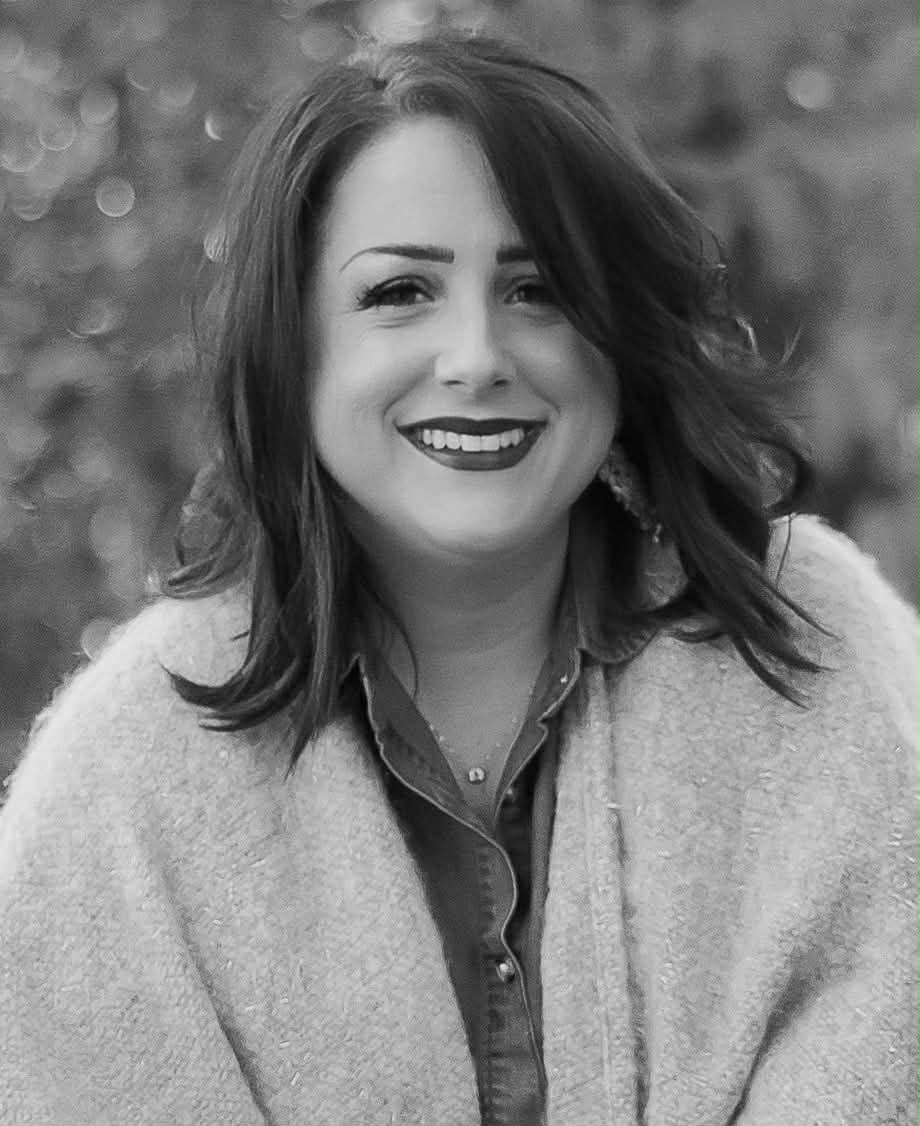 Andrea Legg is the Director of the North Canton Public Library, where she has led with a focus on access, inclusion, and community-centered service since 2020 (yes, she started right at the beginning of the pandemic and lived to tell the tale). She has worked in public libraries since 2008 and currently serves on the Tuscarawas County Board of Developmental Disabilities and the Akron Children's Hospital NICU Parent Mentor Program. Andrea is very serious about libraries, not serious about herself, and lives under the benevolent but firm rule of two corgis who supervise all of her leadership and life decisions.
 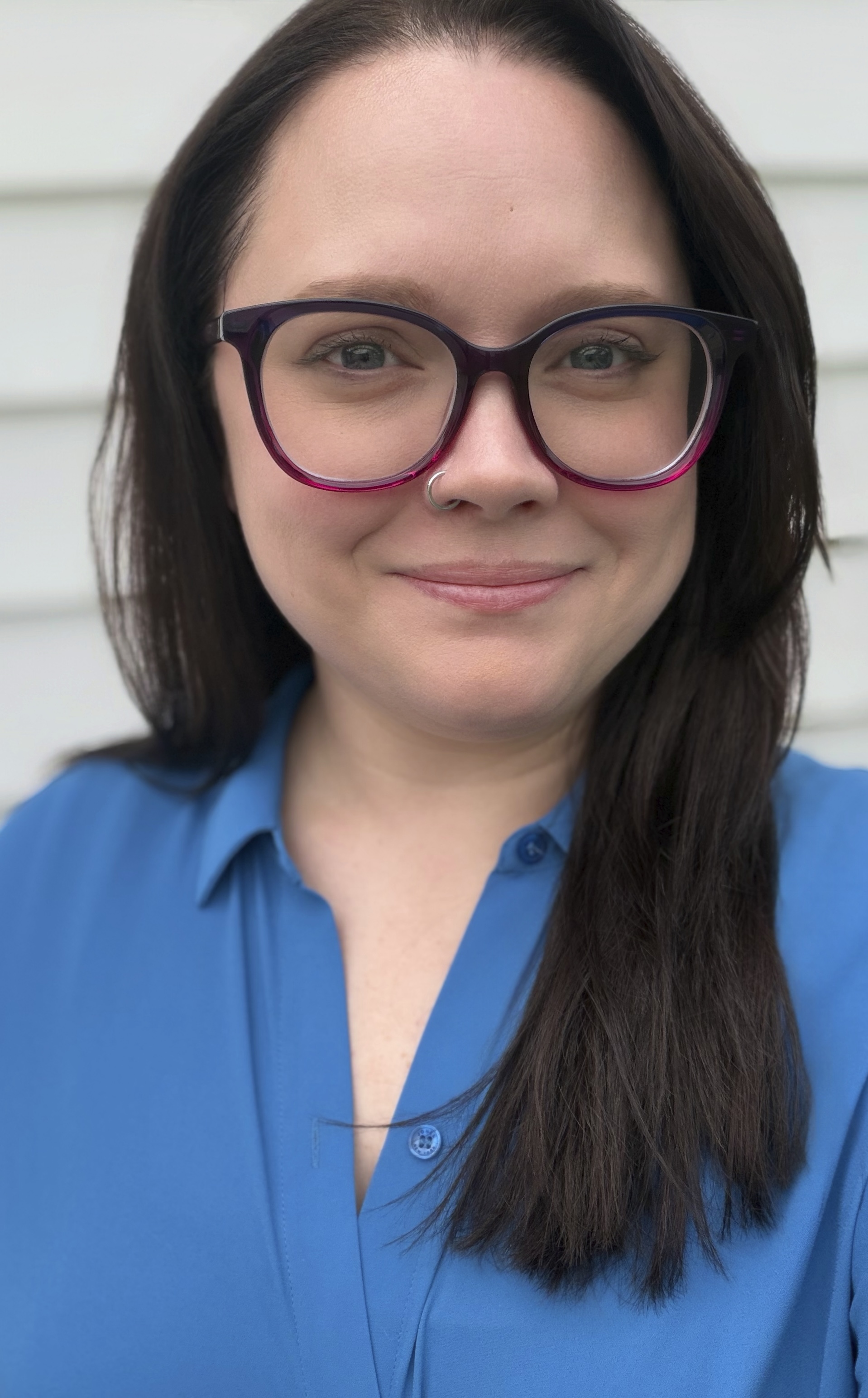 Ragan Snead, Executive Director, Northeast Ohio Regional Library System, has over 15 years of experience in public and academic libraries. She has a passion for staff development and helping library staff reach their full potential. In addition to her work in various areas of librarianship, Ragan has experience in management, community outreach, and strategic planning. She received her MLIS from Kent State University and her MBA from Lake Erie College.
 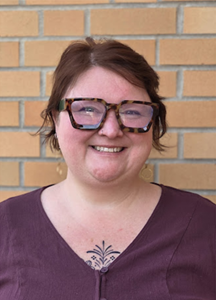 Carolyn Bagley is the intermediate/teen librarian at Firestone Park Library, part of the Akron–Summit County Public Library system. Drawing on 15 years of experience as an educator, she is a vocal advocate for middle and high school students, dedicated to helping adults shift their mindset about teenagers toward seeing them as capable, thoughtful, and worthy of trust. Carolyn is excited to support fellow public service workers with practical professional development rooted in teen-centered practice.
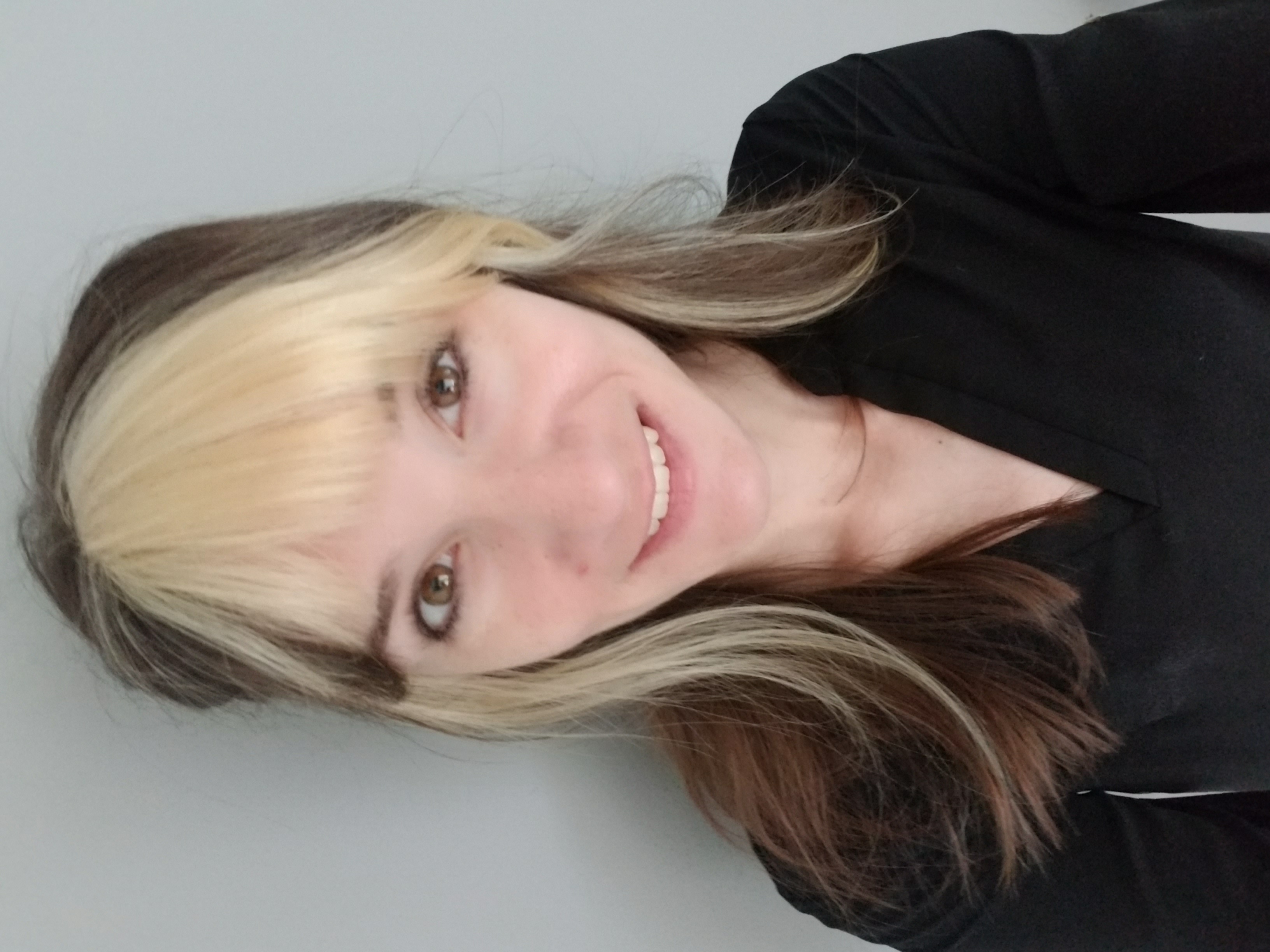 Kelly Chaplin has been working with youth for a decade and is currently the Assistant Youth Services Coordinator at Akron-Summit County Public Library. Kelly helps connect youth librarians with community representatives. She has experience with organizing large-scale programs such as the Library's mini-comicon Geekfest and system-wide services like the free book box subscription Lit Loot. Collaboration is key in all these efforts, and she deeply values what the Library staff can create when working together. She enjoys it when teens teach her new things and encourages youth to participate at their library and in the community.
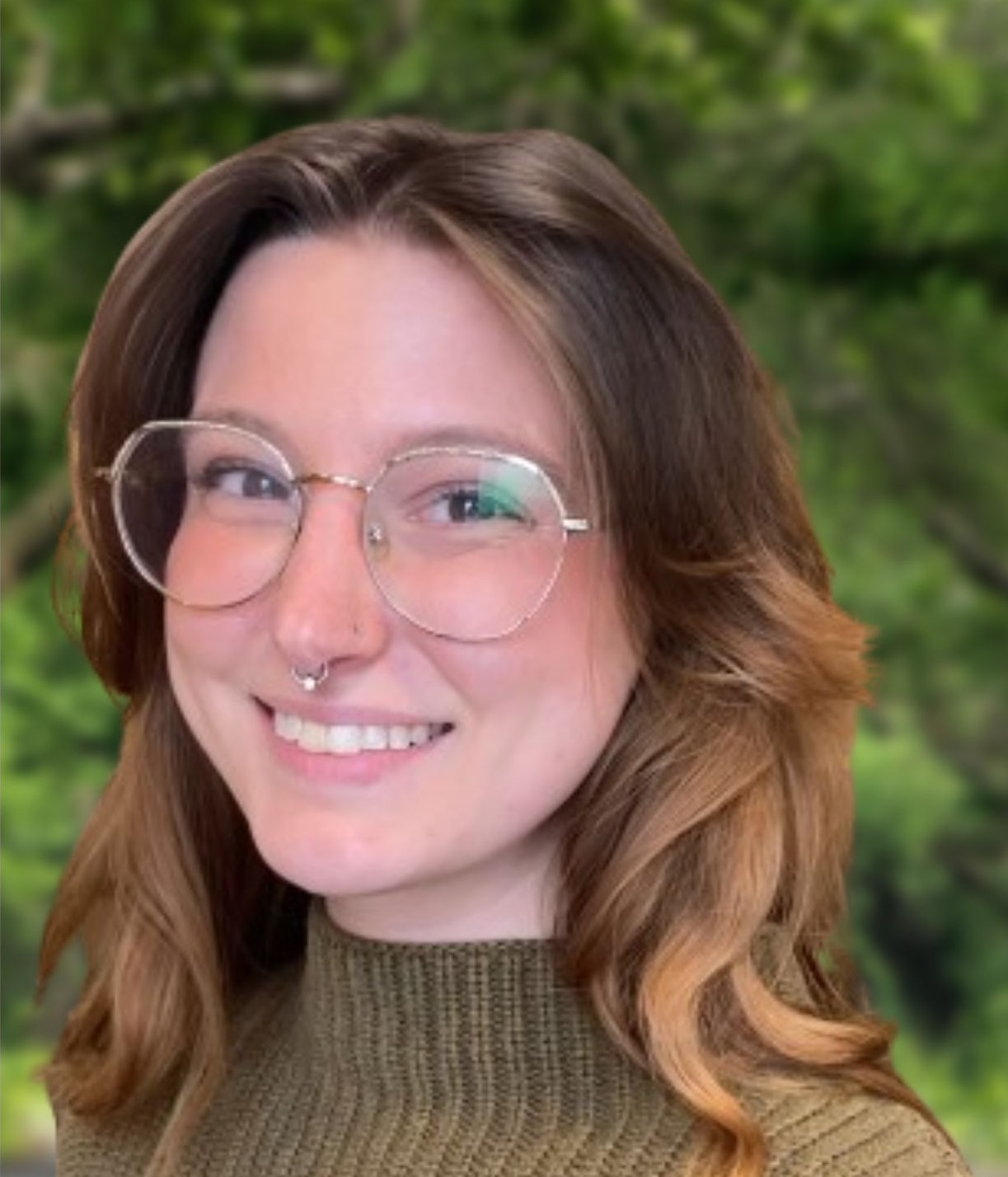 Abigail Krukemeyer is an Intermediate and Teen Librarian with Akron-Summit County Public Library. She is passionate about adolescent development and is dedicated to providing services and opportunities that equip young people to succeed in today's multimodal world.
 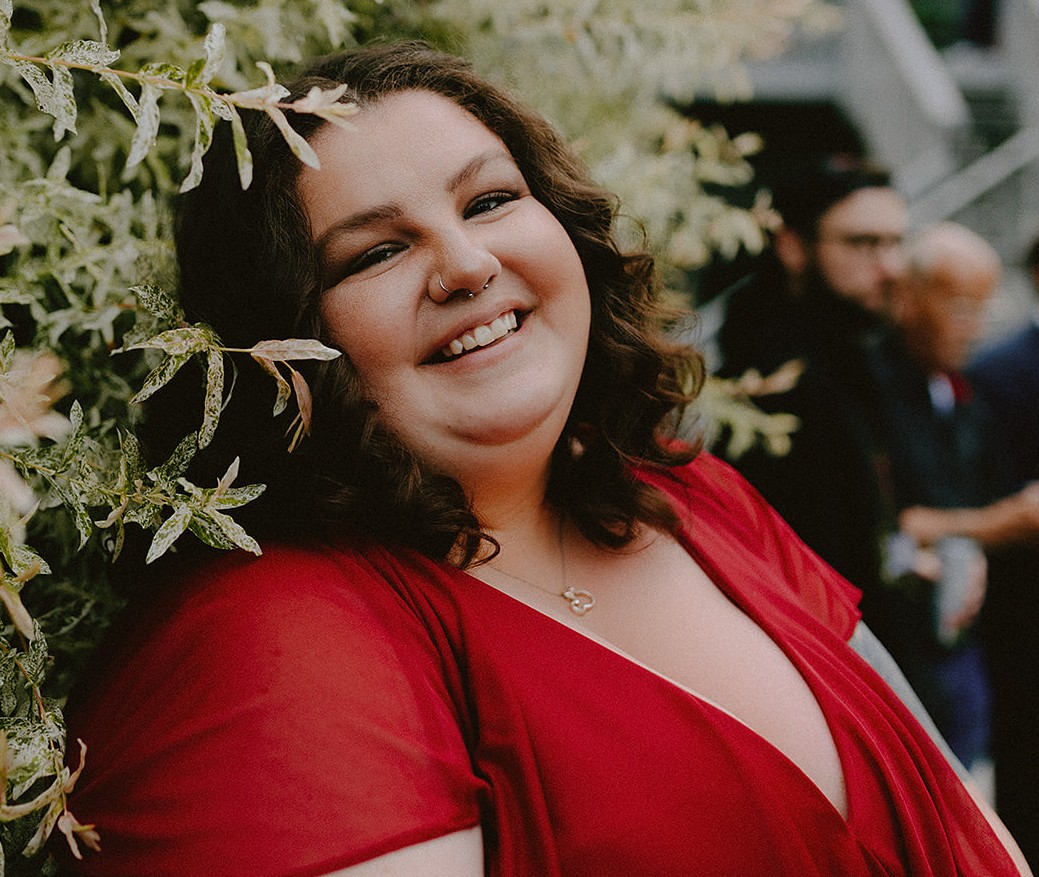 Emily Smith has worked for Akron Summit County Public Library for 8 years, currently serving as one of their Collection Development Librarians, and previously worked as an Intermediate/Teen Librarian. Emily holds a BA in Sociology from the University of Mount Union and an MLIS from Kent State University. Her educational and career background has afforded her the opportunity to work alongside youth and learn and understand their behavior, particularly inside a public library setting.
 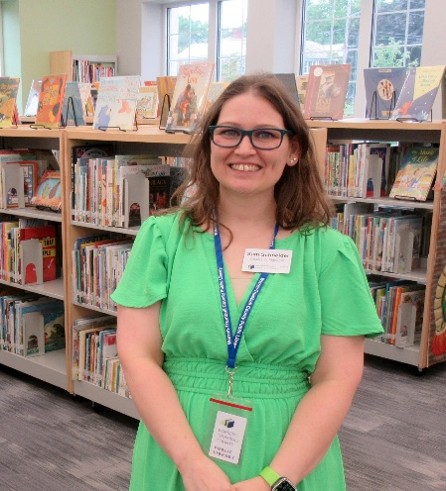 Sam Schneider is the Children’s Manager at the Warren-Trumbull County Public Library. She has spent 19 years working in various positions within public and academic libraries, but primarily within Youth Services. Currently, she serves as an Ohio Ready to Read Trainer and Task Force member. With a passion for promoting literacy and library services, she finds working with families to be one of the most fulfilling endeavors of her career. She received her MLIS from Kent State University and also has degrees in Early Childhood Education and English.
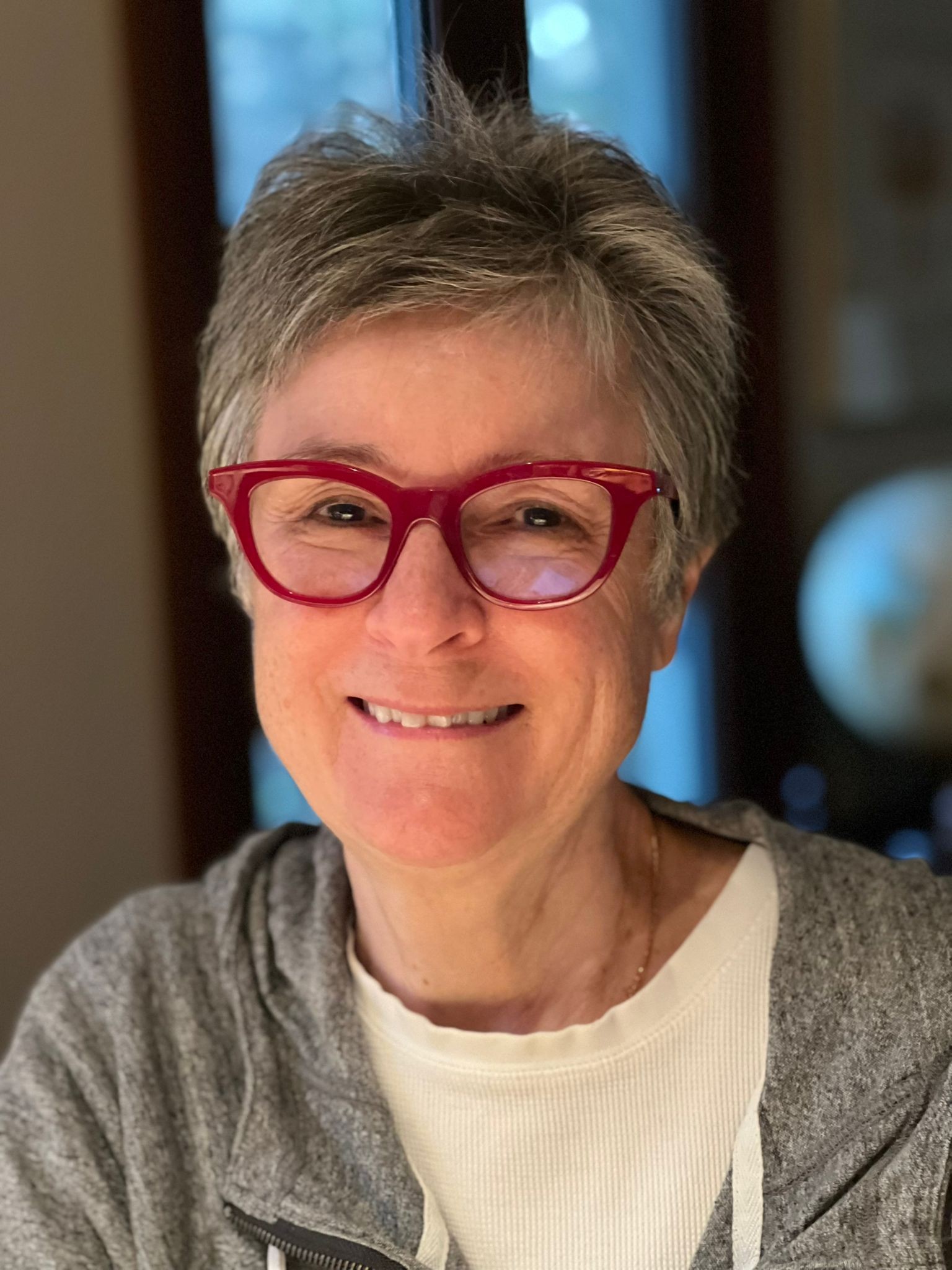 Sharon Groh-Wargo has been involved with PFLAG Cleveland for over 20 years, serving as President from 2005-2020. She is currently Vice-President. Founded in 1973, PFLAG is the first and largest organization dedicated to supporting, educating, and advocating for LGBTQ+ people and their families. It is dedicated to creating a caring, just, and affirming world for LGBTQ+ people and those who love them. PFLAG Cleveland has been active in this effort for the Greater Cleveland area since 1985.
  Hannah Van Sile is a Teen Librarian living and working in Canton, Ohio. She serves on PFLAG Cleveland’s Board as a student intern and works with the American Library Association’s Rainbow Round Table reading and reviewing LGBTQIA+ publications for ALA’s Over the Rainbow Book List, where she serves as an administrator. Hannah holds a Bachelor of Arts in English and Master in Library Science from Kent State University and was honored to be selected as a 2024 ALA Emerging Leader. She is passionate about protecting public libraries as access points for resources, personal growth, and community connection, particularly for those of marginalized identities.
 Helen Rimmer is the founder of The Kind Brave Leader and Empower: The Library Skills Collective. She is a kindness and wellbeing coach, facilitator, Strengthscope Master, certified systemic team coach, and holds a PGCert in the Psychology of Kindness and Wellbeing at Work. Helen brings over 20 years’ experience in library and higher education leadership, alongside her work supporting individuals, teams and organizations to build kinder, braver and more sustainable workplaces. Her work focuses on kindness-led leadership, burnout prevention, boundaries, wellbeing, inclusion and creating humane cultures of work.
 Presenter:
 Presenter:
 Presenter:
 Lynn Warner is a Research and Health Sciences Librarian at the University of Cincinnati. Lynn supports students and faculty in the College of Nursing and College of Allied Health Sciences. She has a passion for information literacy instruction and enjoys teaching people how to find and evaluate the information they are seeking. Lynn has taken an interest in learning about AI tools and how they can (and can’t) be utilized in the research process, and has been involved in AI Literacy initiatives at UC.
 Madeleine Gaiser is an Online Learning and Instruction Librarian at University of Cincinnati’s College of Education, Criminal Justice and Human Services (CECH) Library. Joining UC Libraries in 2020, Madeleine supports academic research, maintains and creates online resources, and purchases library materials. Madeleine has participated in multiple AI initiatives at UC and regularly seeks professional development opportunities on the subject. In her free time, Madeleine collects cookbooks and enjoys longs walks through the Aldi Finds aisle.
 Dr. Robbie Barber is an electrical engineer from Georgia Tech who wandered into a school library. As a teacher-librarian, she works with high school students and teachers to find the best resources, use technology, and locate the perfect book. Dr. Barber teaches classes on using research databases and how to better search the internet. She researches the latest technology, plays with AI, and creates professional presentations on recognizing fake news and other tech-infused ideas in the classroom and the library.
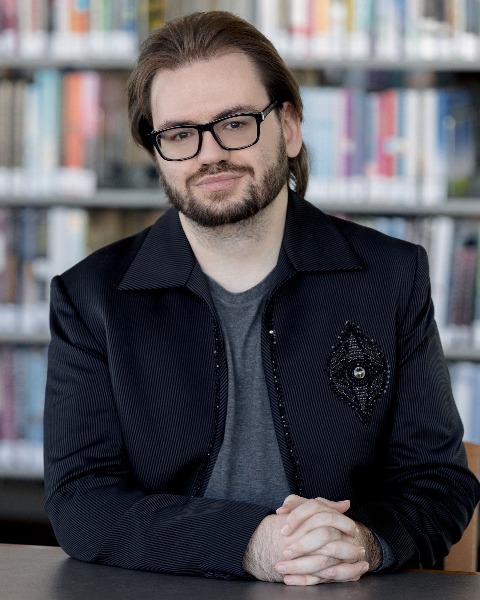 Jordan Ostrum (he/him/his), proudly serves as the LGBTQIA+ Services Specialist for Dayton Metro Library. He holds a B.A. in Gender & Sexuality Studies from Ursinus College and a Master of Library and Information Studies from the University of Alabama. The Advocate, the nation's largest and oldest LGBTQ magazine, honored Jordan as Wyoming Champion of Pride in 2018 for his work empowering LGBTQ youth in the nation's reddest and most rural state. Internationally, Jordan's scholarship on Greek -letter organizations has been cited by Canadian researchers and he recently presented at the The Trans* Research Association of Ireland’s First Annual Symposium. He is currently working on a chapter for the upcoming LItwin Press edited anthology, Potions, Powers, and Prejudice: Reassessing Harry Potter. For fun, Jordan enjoys chewing the scenery in community theatre productions and befriending basset hounds.
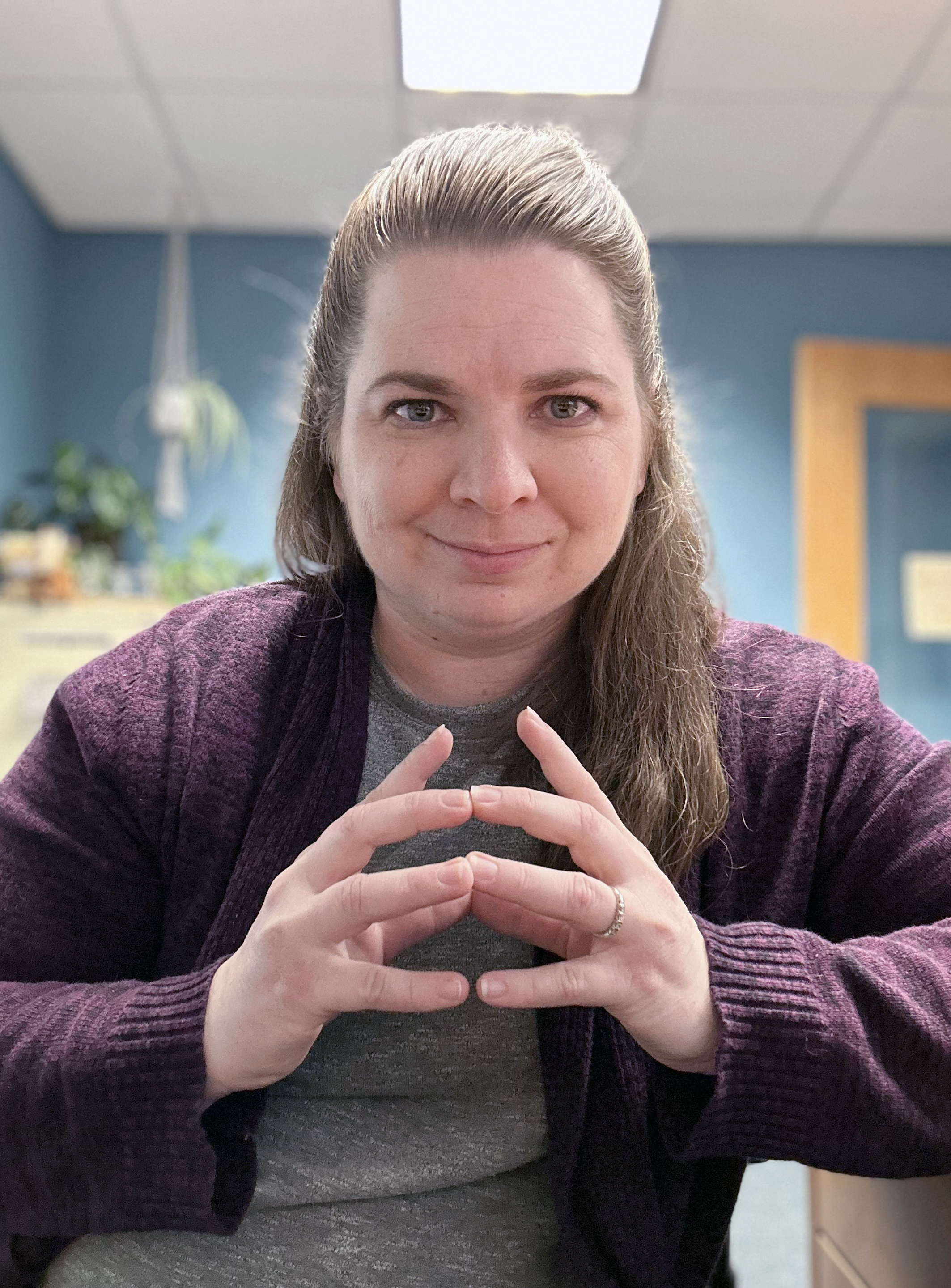 Heather Feenaughty is the PR/Marketing Manager at Westlake Porter Public Library. Heather brings over 14 years' experience in marketing and public relations. She served as a Public Affairs Broadcast Journalist in the U.S. Army for five years and spent seven years at Case Western Reserve University’s Undergraduate Admissions marketing team. Heather has been in the library world for almost 3 years and plans to add many more. Heather has yet to receive the prestigious Cannes Lions Award for Creative Effectiveness but is a five-time local scarecrow contest winner (should be six), won a Rosette at the Cuyahoga County Fair in the crochet division, and spear-headed WPPL’s 2024 Westlake in Bloom first place win.
 NEO-RLS Introduces the 2026-2027 Leadership Academy
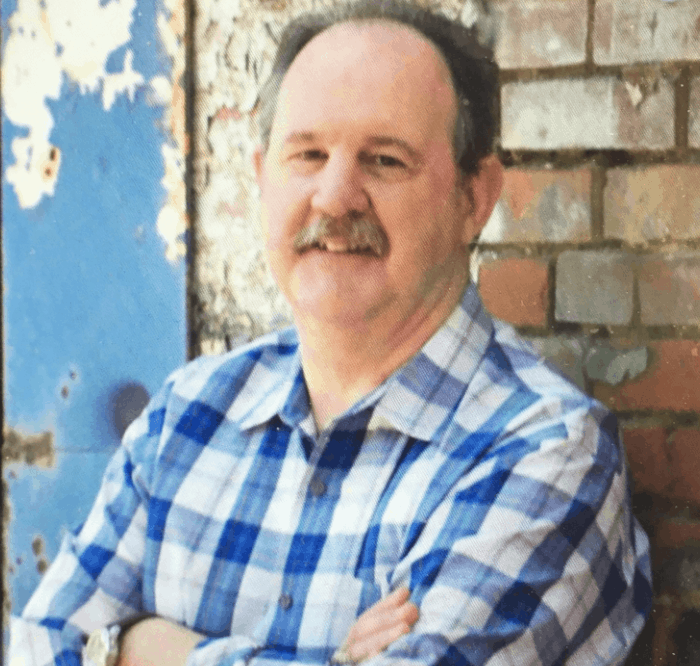 Ned Parks has had a rich and varied life that has taken him from police officer to helicopter pilot to successful entrepreneur with management and leadership positions in the journey.
 Barbara Baker is the founder of ADR Works, a workplace consulting firm that provides dispute prevention and resolution services, collective bargaining and grievance mediation, and training.
 Dr. Jo Phillips serves as the Deputy Director of the Warren-Trumbull County Public Library. She specializes in organizational leadership, team development, and public service innovation, with a particular interest in helping managers navigate the challenges of leading in complex organizations. Jo holds a Doctorate in Organizational Leadership from the University of Dayton and her MLIS focusing in youth services librarianship from Kent State University. She is the Vice-Chair / Chair Elect for ALA’s RUSA CODES section, a 2016 ALA Emerging Leader, and is a 2026 Library Leadership Ohio participant.
 Amanda Standerfer’s passion is helping libraries and nonprofit organizations advance so they can create meaningful impact in their communities. Since 2002, Amanda's consulting practice Fast Forward Libraries has worked with libraries and nonprofits on strategic planning, fundraising, organizational development, and capacity building. Amanda has 15 years of experience at various positions in public libraries, most recently as the Director of Community Engagement for The Urbana (IL) Free Library. She also has 7 years of experience working in the philanthropy sector. She has a BA and MA in History from Eastern Illinois University and a MLIS from the University of Illinois at Urbana-Champaign.
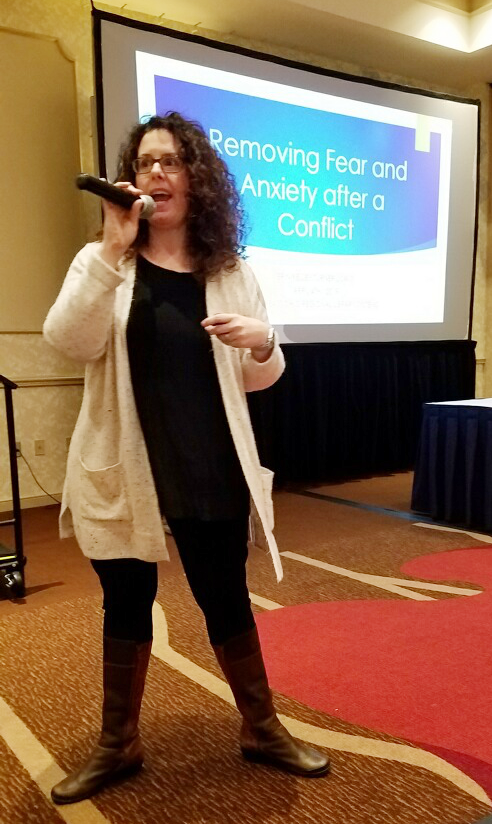 Erin Turner, LISW-S, is is the Supervision and Leadership Educator for Signature Healthy and Adjunct Faculty for Youngstown State School of Social Work Graduate Program. She has worked in community mental health settings for over 20 years as a volunteer, direct service provider, clinical supervisor and program manager. She has extensive experience working with children, adolescents, families and adults with a variety of mental health issues, including trauma, mood disorders and crisis situations. Erin specializes in community-based crisis intervention. Erin has provided multiple trainings within the context of Social Work including Risk Assessment, Trauma, Compassion Fatigue, and Motivational Interviewing.
 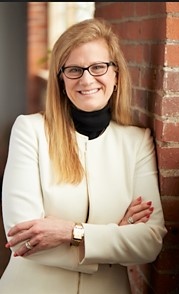 Amy B. Shannon, President, Pinnacle Leadership Solutions, LLC, and a Partner in Your Partner in HR has specialized in Organizational Development, Human Resources and Training for over 25 years. For the past 13 years, Amy has been an Organizational Development consultant working with clients in manufacturing, service, financial and healthcare industries. Most recently, Amy served as the Executive Director II/Vice President of Corporate College where she built robust leadership training curriculum to serve her clients. Amy also holds certifications with numerous nationally known training vendors. She is a regular speaker at national conferences such as The Corporate University Week at the Disney Institute. She is a seasoned speaker for the HR Star Conference Cleveland. As a result of her high ratings, she has also been a key speaker at the HR Star Atlanta and received the Gold Medal Award three years in a row for best session speaker. Amy was a recipient of the 2015 HR Awards presented by ERC & CSHRM.
 Explore why microlearning is an effective way to develop library staff — from boosting motivation and engagement to fostering collaborative learning across teams. This session unpacks the science behind short-form, consistent training and how it drives real behavior change, then introduces FOCUS Microlearning, Novare's weekly inbox-delivered lessons designed to make staff development easy, practical, and sustainable.
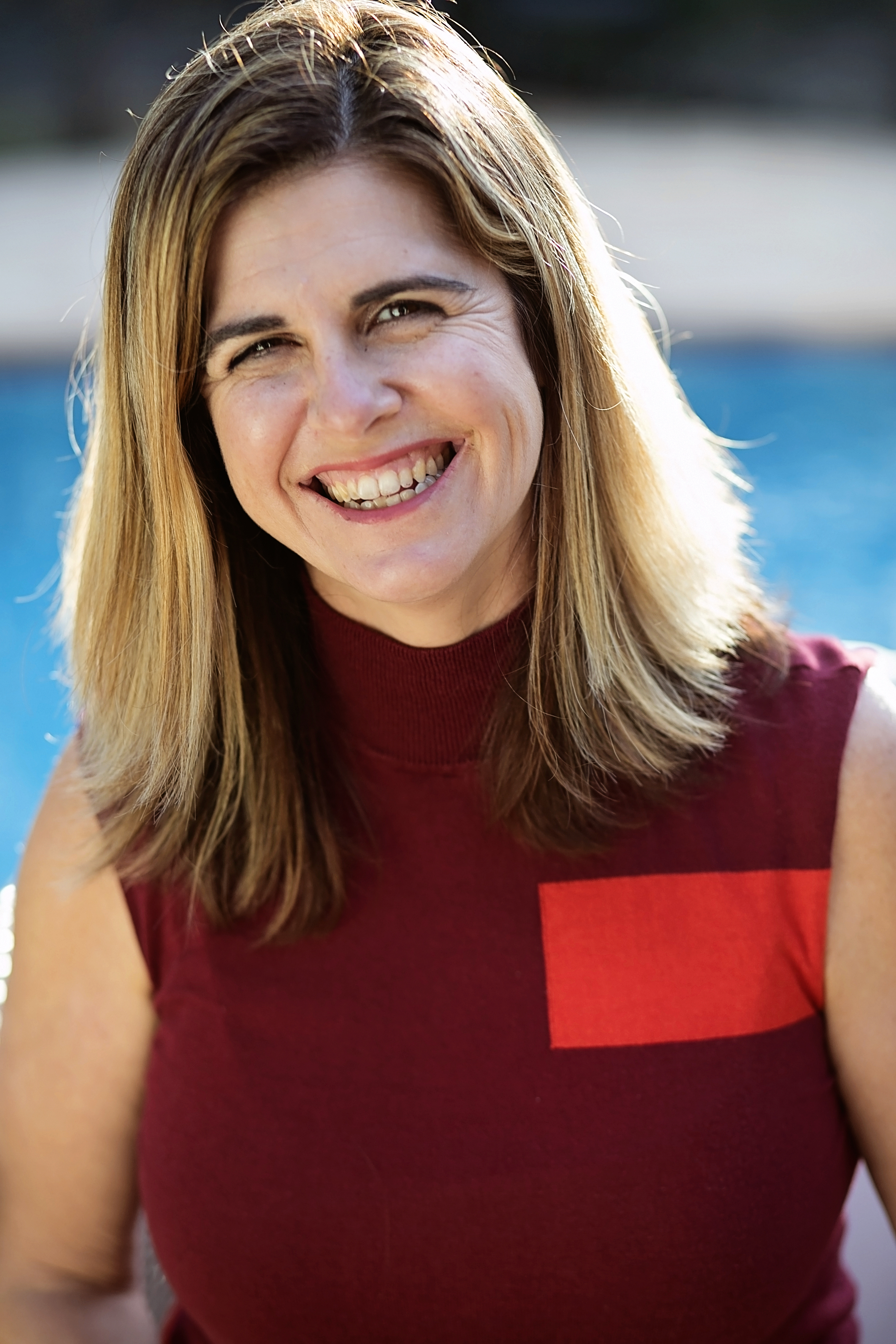 Diana Silveira is a librarian with over 20 years of experience training library staff and president of Novare Library Services, where she helps libraries develop, implement, and effectively use technology. Previously, she worked at the Tampa Bay (FL) Library Consortium and the Charlotte Mecklenburg (NC) Library. Diana holds an MLIS from UNC-Greensboro and a BS in Psychology from Catawba College, and is the author of Library Technology Planning for Today and Tomorrow.
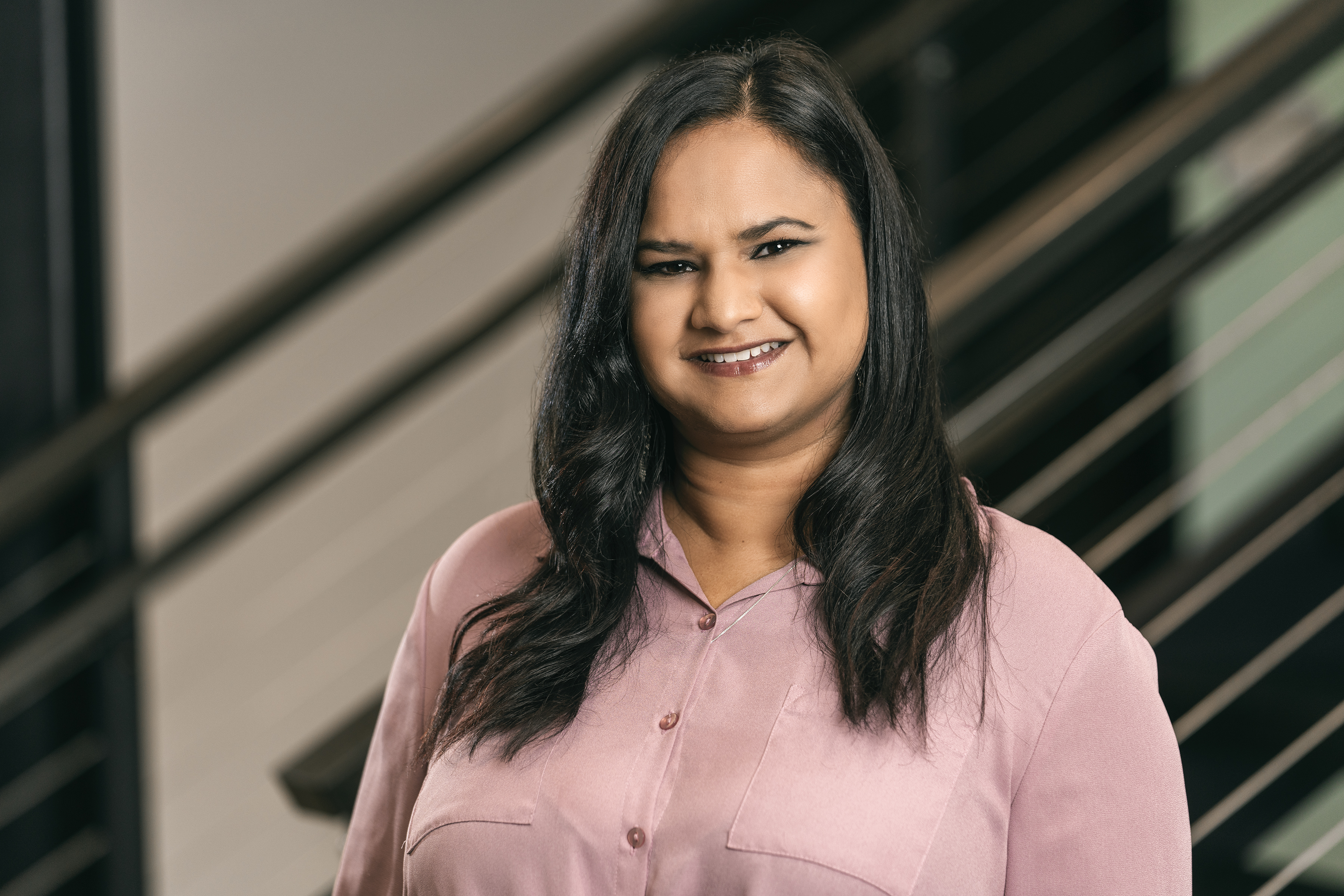 Presenter: Steph Saunders, Senior Technology Consultant
 Julia Shaheen is the Literacy Manager at Stark Library where she oversees the Ready for School program. Through this program, staff visit parents and caregivers to help prepare families for school. She oversees library literacy efforts by providing staff, parent, and educator workshops. She is an Every Child Ready to Read and Reimagining School Readiness trainer presenting workshops throughout Ohio. She provided storytime and other programming in both in-person and virtual capacities. She holds a Master of Arts degree in Education as well as several certificates in reading and early literacy education. She has presented at numerous regional, state and national conferences. She also presents for local schools and organizations and represents Stark Library on radio and television programming.
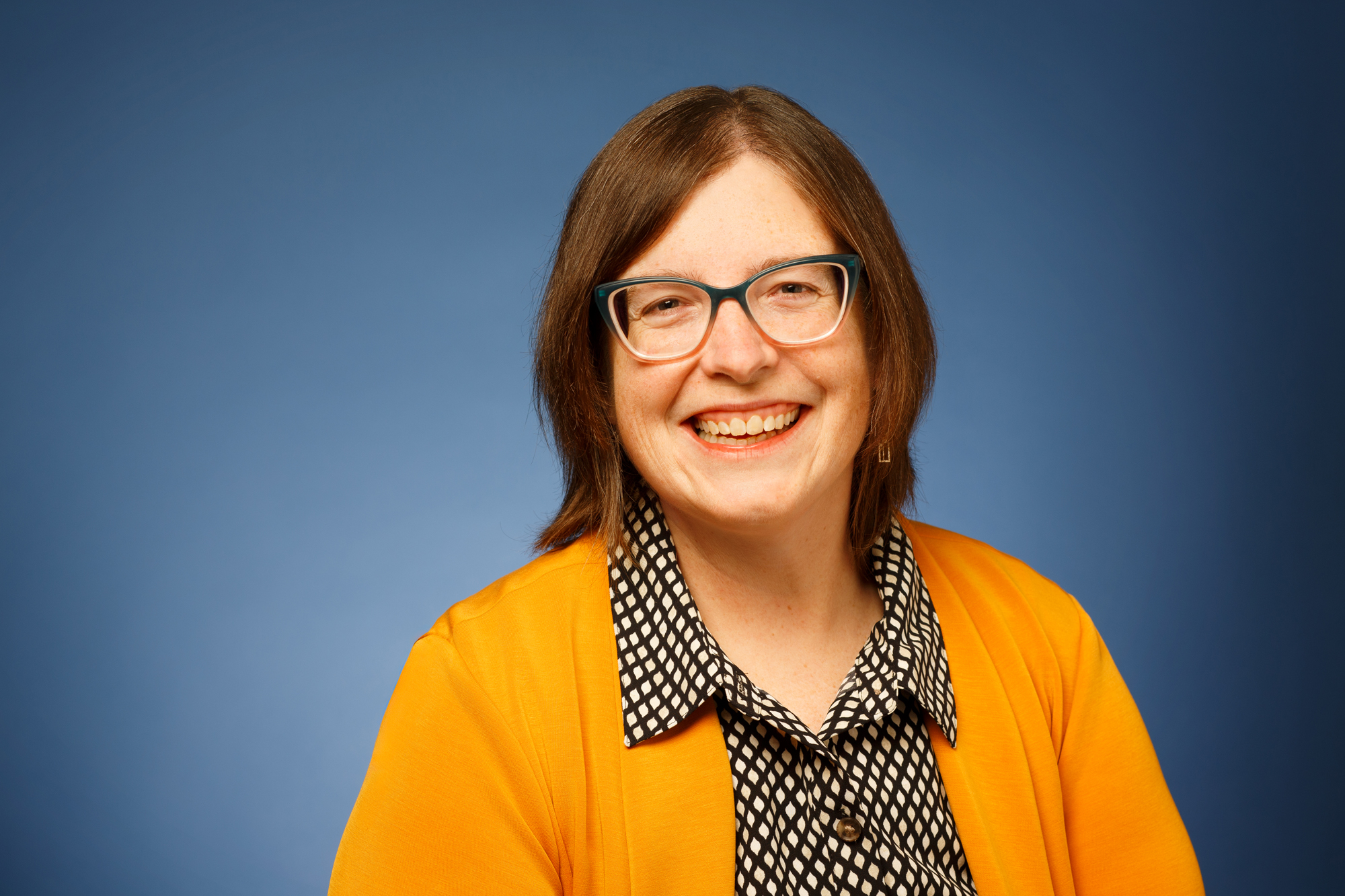 Katy Hite is the Adult Services Library Consultant at the State Library of Ohio. Her job is to support and champion the work of library staff across the state who are serving adult patrons through programs, services and outreach. Katy facilitates Adult Services networking meetings, co-facilitates Building Community-Based Summers learning sessions and provides strategic planning services across the state. She has worked as an adult services supervisor, adult reference librarian and programmer, and an emerging technology librarian at libraries throughout central Ohio.
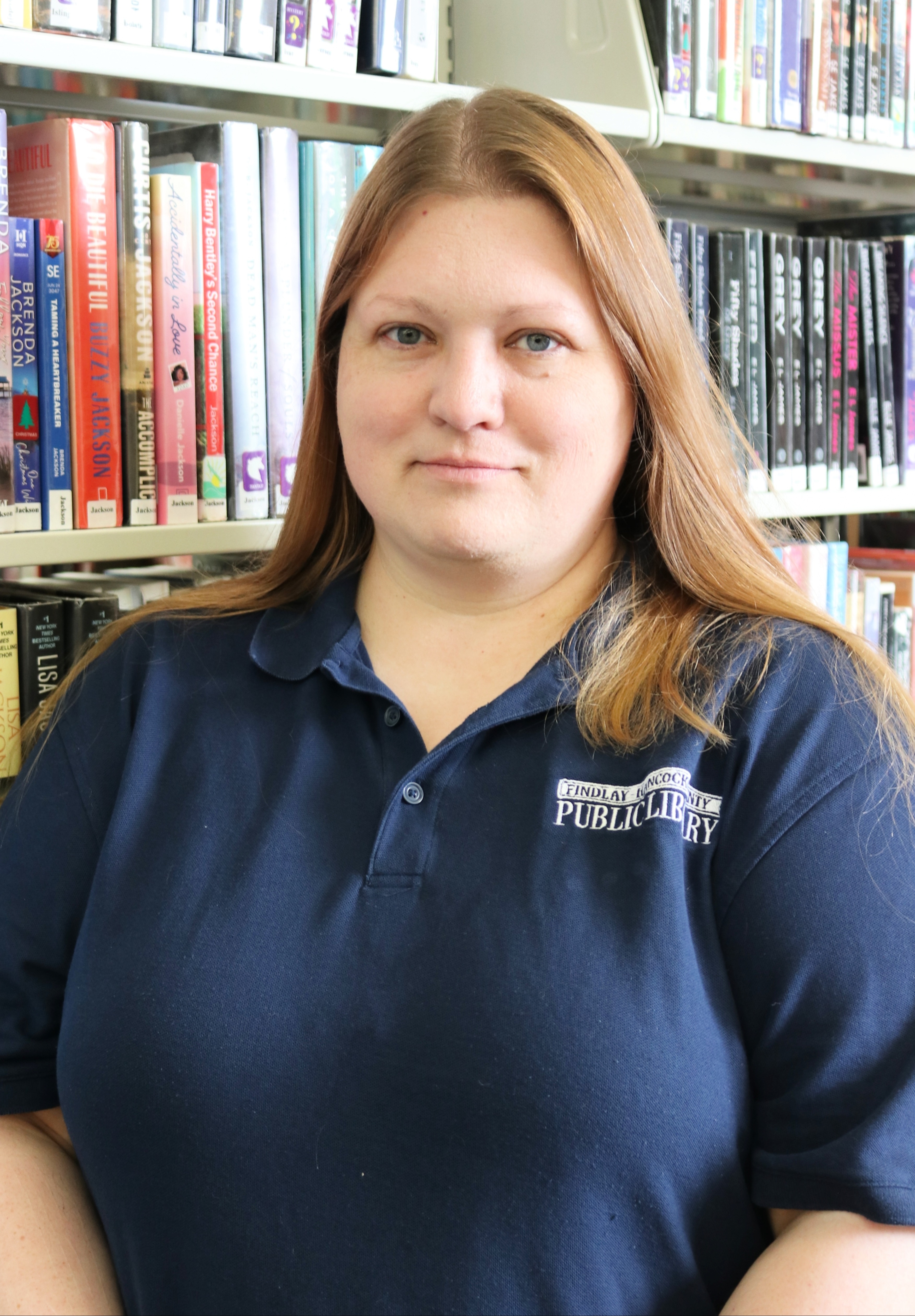 Kristy Szkudlarek is the Read for Life Coordinator at the Findlay-Hancock County Public Library, where she has led adult literacy and English language programs for over 11 years. She holds a degree in Broadcast Telecommunications from the University of Findlay and is a certified ProLiteracy Tutor Trainer, Intercambio ESOL teacher, and Mental Health First Aid responder. She is the 2025 recipient of the Ohio Library Council's Service Excellence Award. Outside of work, Kristy enjoys reading, spending time with her family, and is currently working on learning a new language herself, keeping her connected to the challenges and joys her students experience every day.